
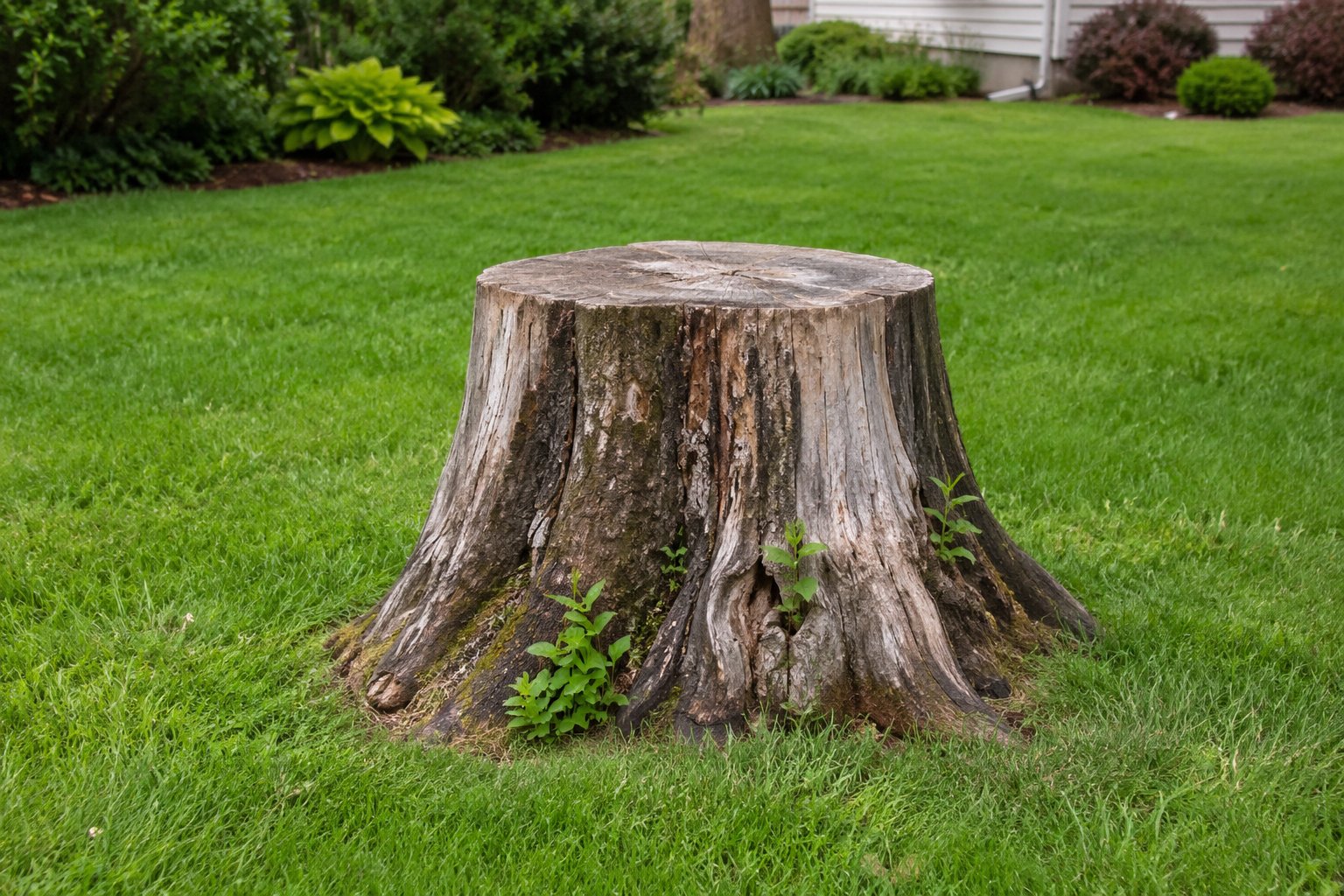
Why Remove a Tree Stump? Reasons Not to Leave One Sitting in Your Yard

By Hometown Tree Experts

Once a tree comes down, the stump left behind looks like the end of the job. In our experience around Burtonsville, it is often the start of a slower one. A stump is not just a flat spot you learn to mow around. It is a large piece of dead, moist wood sitting in the ground and still tied to a root system, and that combination quietly works against your yard and sometimes your house. So the real question is not whether the stump looks bad. It is why remove a tree stump before it causes problems you cannot see yet, and what it is doing underground while you get used to it.

A leftover stump is a liability, not just an eyesore

Most advice about stumps stops at “they look bad.” That is the least of it. The reasons that actually matter have to do with what dead wood in the ground attracts, what it can spread to the trees you kept, and what it tries to grow back into. None of that shows up the week the tree comes down. It builds over seasons, which is exactly why a stump is easy to ignore until it turns into a bigger job. It helps to walk through what a stump is really doing while it sits there.

A decaying stump can become a pest magnet near your home

A fresh cut stump does not stay solid for long. As it decays it becomes soft, damp, and full of the cellulose that wood destroying insects feed on and nest in, and it sits right at or below ground level where those insects already travel. That is worth taking seriously when the stump is anywhere near the house.

Subterranean termites are the clearest example. University extension entomologists describe a termite’s natural habitat as including stumps, posts, and other wood in contact with the ground, and they note that termite colonies live in the soil and move into buildings through structural wood or foundation walls next to that soil. A rotting stump close to the foundation is essentially a feeding station in the exact zone termites forage. It will not always lead to an infestation indoors, but it removes the buffer you want between hungry soil colonies and your framing.

Carpenter ants are the other frequent tenant. They do not eat wood, they excavate it to build nests, and they strongly prefer wood that is already decayed and damp, which is what an aging stump becomes. Colorado State University Extension notes that carpenter ants build extensive nest galleries in dead and down wood, and that nests inside a structure are often satellites of a larger colony outdoors. In plain terms, a soft stump in the yard can become the parent colony, and the wood of your home can become the annex. Wood boring beetles round out the list, drawn to the same decaying wood. None of this is a guarantee, but a stump near the house tilts every one of these odds the wrong way.

Stumps can harbor decay fungi that spread to healthy trees

Pests are at least visible. The fungal problem is not, which is part of what makes it worse. When a tree is cut, the stump and its roots stay in the ground as a large mass of dead wood, and certain decay fungi treat that mass as a long term food supply and a base to spread from. Armillaria root rot, sometimes called shoestring root rot, is the classic case. University of Minnesota Extension explains that Armillaria can survive for many years in wood debris like an old stump or root system, that new infections happen when healthy roots grow close to diseased roots, and that black, shoestring like strands called rhizomorphs can reach up to ten feet from an infected stump to infect healthy roots. Their advice for managing it is direct: remove the stumps and as many roots as possible of infected trees. If the tree you took out came down because of root disease in the first place, leaving its stump in place can hand that disease a reservoir sitting right next to the trees and shrubs you want to protect.

Some stumps do not die, they grow back

Not every stump is quietly rotting. Some are trying to become trees again. Many broadleaf species resprout vigorously after they are cut, sending up fast growing shoots from the stump itself or up from the roots several feet away. Penn State Extension explains that stump sprouts come from suppressed dormant buds at the root collar, the point where the stem meets the roots, and that essentially all broadleaf (angiosperm) trees have the ability to stump sprout, while needled conifers rarely do. Species like red maple are especially prolific at it. If you have ever cut a tree only to battle a ring of new shoots around the stump the next season, this is why. Mowing or cutting the sprouts back rarely settles it, because the energy driving them is stored in a living root system that the stump is still connected to. As long as the stump and its main roots stay intact, a determined tree can keep trying.

The safety and space you give up by leaving it

Then there is the everyday toll of simply having it there. A stump sitting low in the lawn is a real trip hazard, especially once grass grows over the edge and it disappears from view. It is also a hidden obstacle for a mower deck or a string trimmer, the kind of thing that wrecks a blade or a belt on the one pass you forgot it was there. Children and guests crossing the yard are not watching for it. And the root system tied to that stump keeps occupying space underground, which limits where you can plant, regrade, set a fence post, or pour a patio. The stump is not holding still and politely waiting. It is quietly claiming a piece of your yard.

Why remove a tree stump for good

Put the reasons side by side and the picture is consistent. A leftover stump can draw termites and carpenter ants toward your home, can harbor decay fungi that spread to healthy trees through the roots, can resprout into the tree you just had taken down, and can stay a trip hazard and a buried obstacle for years. Grinding the stump out addresses all of it at once. It turns the stump and its upper root system into chips below grade, which takes away the food source that draws pests, removes the reservoir decay fungi live in, and cuts off the dormant buds and stored energy that drive resprouting. When you want the ground back clean and settled instead of babysitting a slow problem, professional stump removal is how we finish the job properly.

Left with a stump you would rather not live around in Burtonsville or Montgomery County? The team at Hometown Tree Experts can assess what is still in the ground and grind it out cleanly. Reach out to us and we will take it from there.

Frequently Asked Questions About Removing a Tree Stump

Why should I remove a tree stump instead of letting it rot on its own?

Because the years it spends rotting are the problem. As a stump decays it turns into soft, damp, cellulose rich wood at ground level, which is exactly what termites, carpenter ants, and wood boring beetles are drawn to, and it can also host decay fungi that spread to nearby healthy trees. On top of that, many species resprout from the stump before it ever breaks down. Removing it ends all of those risks instead of living with them while it slowly rots.

Can a tree stump really attract termites to my house?

It can raise the risk. University extension entomologists describe a termite’s natural habitat as including stumps and other wood in contact with the soil, and note that soil colonies enter buildings through wood or foundation walls next to that soil. A rotting stump near the foundation is a food source in the exact zone termites forage, so it removes the buffer you want between soil colonies and your home. It is not a certainty, but it works against you.

Will a tree grow back from a stump if I leave it?

For many broadleaf trees, yes. Penn State Extension explains that stump sprouts grow from dormant buds at the root collar, and that essentially all broadleaf species can stump sprout while conifers rarely do. Prolific sprouters like red maple can send up a cluster of fast growing shoots the next season. Because the energy comes from a living root system, cutting or mowing the shoots usually does not stop them for good. Grinding the stump and disrupting the roots does.

Can a leftover stump make my other trees sick?

It can act as a reservoir for root disease. University of Minnesota Extension notes that Armillaria root rot can survive for many years in an old stump or root system, that it spreads when healthy roots grow close to diseased ones, and that its rhizomorph strands can reach up to ten feet to infect healthy roots. Their guidance is to remove the stumps and as many roots as possible of infected trees, which is especially worth doing if the tree came down because of disease.

Is grinding the stump enough, or do the roots need to come out too?

Grinding the stump and its upper root system below grade handles the issues most homeowners care about: it removes the wood that draws pests and decay fungi, and it cuts off the buds and stored energy that cause resprouting. Deeper or wider roots may stay in the soil, where they decompose on their own without feeding new growth. When you have a plan for the spot, like a patio, fence line, or new planting, tell us so we can grind deep enough for what is going there.
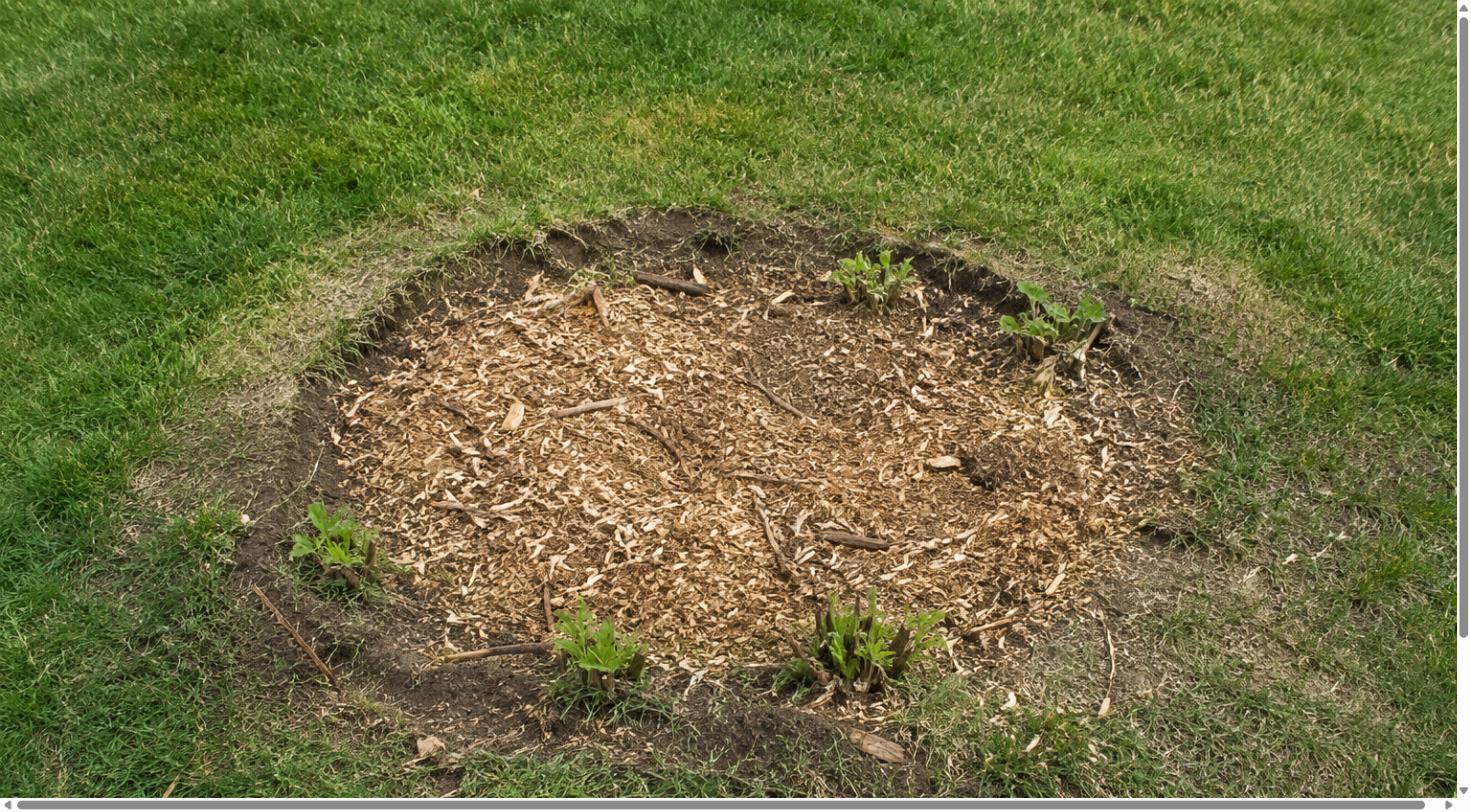

What Happens After Stump Grinding: The Roots, the Settling, and Planting There Again

The grinder finishes, the stump is gone, the ground is raked smooth and seeded, and the job looks done. But grinding the stump is only the visible half of the story. Below the surface, the tree’s entire root system is still there, and over the next few months and years it quietly does things that surprise a lot of homeowners. The ground sinks. Grass sometimes struggles to fill in. Once in a while, a few green shoots appear where the tree used to be.

None of that means the job was done wrong. It is just what happens underground after a stump is ground, and knowing about it ahead of time makes the difference between a spot that turns out great and one that frustrates you. Here is what actually goes on beneath a ground stump, and what it means if you want to seed, plant, or build on that spot.

Grinding Removes the Stump, Not the Roots

A stump grinder chews the stump and the root flare down below ground level, and we grind at least six inches down, deeper on request, turning that wood into a mix of chips and soil. What it does not do is pull the tree’s roots out of the ground. Those lateral roots, which often spread out as far as the branches once reached, stay right where they are and begin to decay slowly. That is normal, and it is how grinding is meant to work. It is far less invasive than digging the whole root system out. But it does mean the removal you can see is sitting on top of a root system you cannot, and that hidden part is what shapes everything that happens next. The stump is usually what is left over after a tree removal, so the roots below it can be substantial.

Why the Ground Sinks, and What to Do About It

As those buried roots and any leftover ground wood break down over months and years, they leave small voids behind, and the soil on top settles down into them. A spot that was perfectly level the day we left can develop a shallow dip over the first year or two. This is expected, not a defect. The fix is easy: keep an eye on the area and top it up with soil, then reseed, a couple of times as it settles, until it holds a level grade. How long the settling goes on depends mostly on the tree. Softwoods like pine break down within a few years, while dense hardwoods like oak and maple can take five to ten years or longer, faster in warm, moist soil and slower in dry ground.

What to Do With the Grindings

Grinding produces a surprising amount of material, usually more than the stump looked like it held, because the chips fluff up as they come off. You have two options, and we will do whichever you prefer: haul the grindings away, or use them to help fill the hole and top it with soil. One thing is worth understanding, though. Fresh wood chips are not soil, and they should not be treated like it. Piled into the ground where you want to grow something, they cause a temporary problem we will get to in a moment. Spread on top as a surface mulch a few inches deep, kept off the stems of plants, they are perfectly useful.

The Nitrogen Problem That Trips Up New Plantings

This is the one that catches people off guard. When wood decomposes, the microbes doing the work pull nitrogen out of the surrounding soil to power the process, which temporarily leaves that spot short of the nitrogen new plants depend on. It is why grass seed sown straight into a bed of grindings often comes up thin and yellow, and why a new plant tucked into leftover chips sits and sulks instead of growing. The effect is temporary, but it is real. The way around it is to keep a mass of fresh chips out of the growing zone: clear them out, backfill with quality topsoil, and if you are seeding a lawn, a nitrogen-rich fertilizer helps the grass establish while the last of the wood breaks down.

Can You Plant a New Tree Where the Old One Was?

Yes, though usually not right in the same hole, and it is worth planning for. Three things work against a new tree planted directly over an old ground stump. The old roots are still there, occupying the space the new roots need to spread. The decaying wood ties up nitrogen and can cause drainage problems right where the new tree sits. And standard grinding depth is shallower than a new tree’s root ball really wants. The simplest arborist advice is to plant the new tree three to six feet away from the old spot, in undisturbed soil, if the layout allows. If it has to go in exactly the same place, we can grind deeper or excavate the area, clear out the chips and old root material, and backfill with good topsoil so the new tree has both room and nutrients to get established. Starting with a smaller, younger tree helps it settle in faster too. If your goal is to get the roots out entirely rather than just grind the stump, that is a different service, and it is worth understanding how grinding compares to full stump removal before you decide.

Will the Stump Grow Back?

For almost every tree, no. Grinding the stump and root flare below grade kills the stump, so it cannot push out fresh growth the way a stump that was only cut can. The main exception is a handful of especially vigorous species, some maples and poplars among them, that can occasionally send up suckers from the roots still in the ground. If that does happen, the shoots are easy to cut back or treat, and they stop for good once the roots finish dying off. The most useful thing you can do is tell us what kind of tree it was when we grind the stump, so we can flag whether suckering is even a possibility and handle it up front rather than leaving you to deal with surprise sprouts.

Making the Spot Usable Again

Whether you are picturing lawn, a garden bed, a patio, or a brand new tree, the place where a stump was ground can absolutely become useful again. It just helps to know what is happening underneath so you set it up the right way. For a patio or anything structural, it is usually worth either waiting for the root mass to break down or having the area properly excavated and compacted first, so you do not end up with the ground settling under your hardscape later. And if you have a stump you want gone, or one that was ground somewhere else and left you with a sinking, struggling patch, our stump removal team can grind it correctly, clear the roots when the plan calls for it, and set the spot up for whatever you want to put there next.

Frequently Asked Questions About Stump Grinding

Do tree roots die after stump grinding?

Yes, eventually. Grinding kills the stump, and the roots left in the ground gradually decay over time with the help of soil microbes, fungi, and insects. As they break down they actually return nutrients to the soil. The process is slow, though, taking a few years for softer woods like pine and five to ten years or more for dense hardwoods like oak and maple.

Why is the ground sinking where my stump was ground?

Because the roots and ground-up wood left below the surface are decaying and leaving small voids, and the soil on top settles into them. This is normal after stump grinding and usually shows up over the first year or two. Topping the area up with soil and reseeding a couple of times as it settles will keep it level.

Can I plant grass over a ground stump?

Yes, but prepare the spot first. Grass seeded directly into leftover wood grindings often comes in thin and yellow because the decomposing wood temporarily ties up nitrogen in the soil. Clearing out the grindings, backfilling with quality topsoil, and adding a nitrogen-rich fertilizer before seeding gives the lawn what it needs to fill in evenly.

Can I plant a new tree where a stump was ground?

Usually not directly in the same hole without some prep. The old roots still occupy the space, the decaying wood ties up nitrogen, and standard grinding is shallower than a new tree needs. It is best to plant three to six feet away in undisturbed soil, or to have the spot ground deeper or excavated and backfilled with topsoil if the new tree has to go in the same place.

Will a ground stump grow back?

For almost all trees, no, because grinding kills the stump. A few aggressive species, such as some maples and poplars, can occasionally send up suckers from the remaining roots, but those shoots are easy to deal with and stop once the roots die. Telling your arborist the tree species helps them anticipate it.

Why Tree Cutting Is so Expensive

Why Tree Cutting Is so Expensive?

Tree cutting often surprises property owners with its hefty price tag, and understanding the reasons behind these costs can be enlightening. While many assume it’s a straightforward task, the reality involves several hidden complexities. Factors such as the size of the tree, its location, and the accessibility of the site require specialized equipment and skilled labor. Additionally, the removal of diseased trees and the associated risks further complicate the process. Seasonal demand and market fluctuations also play a role in driving up prices. But what truly stands behind these costs, and how do they reflect on the industry as a whole? Read More

5 Advantages of Tree Stump Grinding

Tree removal can be a costly process which might lead you to consider not having a tree stump removed to save time and money. While that is always an option, there are many benefits to having your tree stump removed or grinding the tree stump down so that it is no longer visible, or a nuisance on your property.Β 

Read More

5 Best Ways to Remove a Stump

So you’ve cut down that tree that’s been sending leaves into your pool all summer long but now you have a new problem: an ugly tree stump. If you want to get rid of the stump, there are several ways to go about it. Here are the five best ways to have a stump removed. Read More