Blog

Why Remove a Tree Stump? Reasons Not to Leave One Sitting in Your Yard

By Hometown Tree Experts

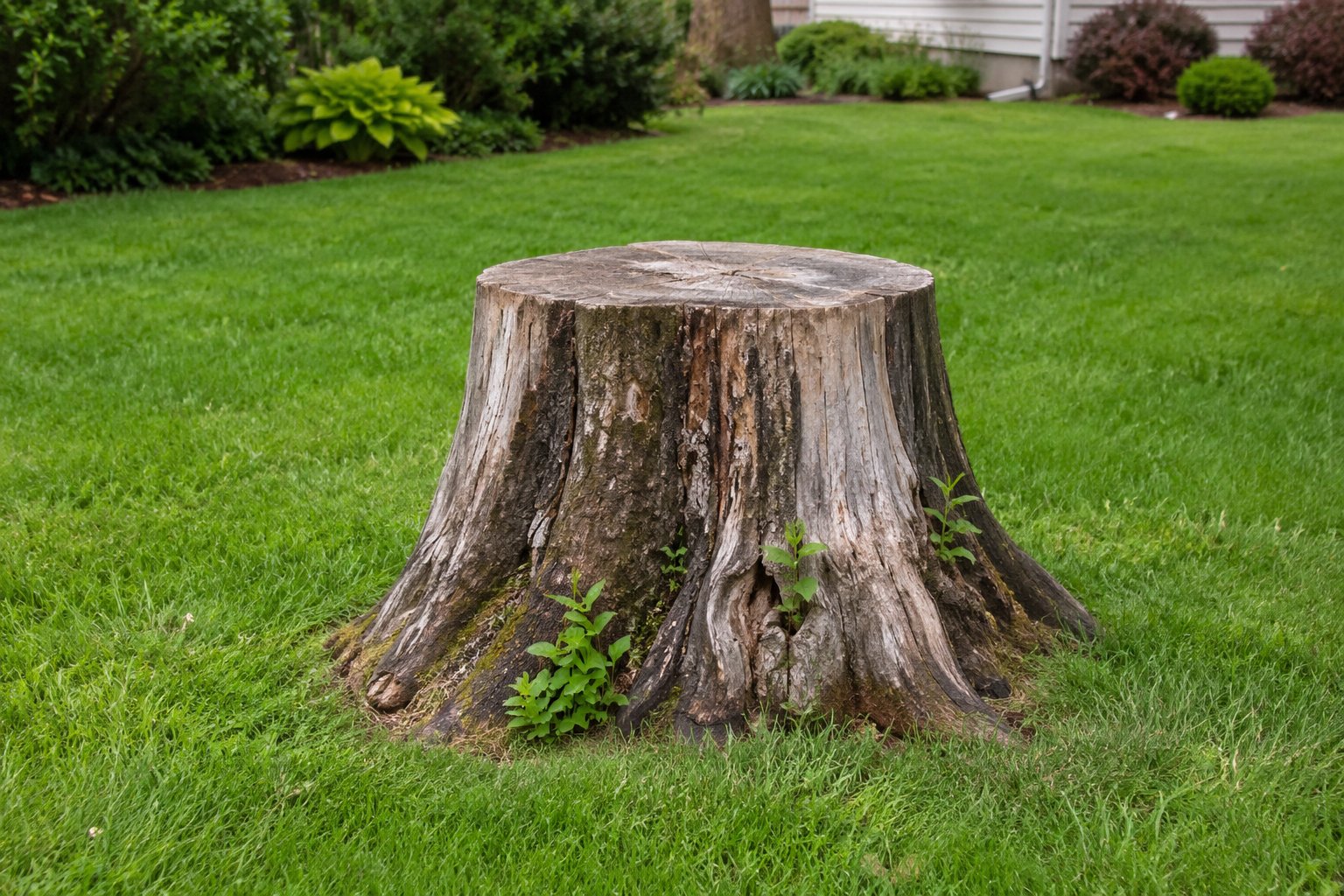
Once a tree comes down, the stump left behind looks like the end of the job. In our experience around Burtonsville, it is often the start of a slower one. A stump is not just a flat spot you learn to mow around. It is a large piece of dead, moist wood sitting in the ground and still tied to a root system, and that combination quietly works against your yard and sometimes your house. So the real question is not whether the stump looks bad. It is why remove a tree stump before it causes problems you cannot see yet, and what it is doing underground while you get used to it.

A leftover stump is a liability, not just an eyesore

Most advice about stumps stops at “they look bad.” That is the least of it. The reasons that actually matter have to do with what dead wood in the ground attracts, what it can spread to the trees you kept, and what it tries to grow back into. None of that shows up the week the tree comes down. It builds over seasons, which is exactly why a stump is easy to ignore until it turns into a bigger job. It helps to walk through what a stump is really doing while it sits there.

A decaying stump can become a pest magnet near your home

A fresh cut stump does not stay solid for long. As it decays it becomes soft, damp, and full of the cellulose that wood destroying insects feed on and nest in, and it sits right at or below ground level where those insects already travel. That is worth taking seriously when the stump is anywhere near the house.

Subterranean termites are the clearest example. University extension entomologists describe a termite’s natural habitat as including stumps, posts, and other wood in contact with the ground, and they note that termite colonies live in the soil and move into buildings through structural wood or foundation walls next to that soil. A rotting stump close to the foundation is essentially a feeding station in the exact zone termites forage. It will not always lead to an infestation indoors, but it removes the buffer you want between hungry soil colonies and your framing.

Carpenter ants are the other frequent tenant. They do not eat wood, they excavate it to build nests, and they strongly prefer wood that is already decayed and damp, which is what an aging stump becomes. Colorado State University Extension notes that carpenter ants build extensive nest galleries in dead and down wood, and that nests inside a structure are often satellites of a larger colony outdoors. In plain terms, a soft stump in the yard can become the parent colony, and the wood of your home can become the annex. Wood boring beetles round out the list, drawn to the same decaying wood. None of this is a guarantee, but a stump near the house tilts every one of these odds the wrong way.

Stumps can harbor decay fungi that spread to healthy trees

Pests are at least visible. The fungal problem is not, which is part of what makes it worse. When a tree is cut, the stump and its roots stay in the ground as a large mass of dead wood, and certain decay fungi treat that mass as a long term food supply and a base to spread from. Armillaria root rot, sometimes called shoestring root rot, is the classic case. University of Minnesota Extension explains that Armillaria can survive for many years in wood debris like an old stump or root system, that new infections happen when healthy roots grow close to diseased roots, and that black, shoestring like strands called rhizomorphs can reach up to ten feet from an infected stump to infect healthy roots. Their advice for managing it is direct: remove the stumps and as many roots as possible of infected trees. If the tree you took out came down because of root disease in the first place, leaving its stump in place can hand that disease a reservoir sitting right next to the trees and shrubs you want to protect.

Some stumps do not die, they grow back

Not every stump is quietly rotting. Some are trying to become trees again. Many broadleaf species resprout vigorously after they are cut, sending up fast growing shoots from the stump itself or up from the roots several feet away. Penn State Extension explains that stump sprouts come from suppressed dormant buds at the root collar, the point where the stem meets the roots, and that essentially all broadleaf (angiosperm) trees have the ability to stump sprout, while needled conifers rarely do. Species like red maple are especially prolific at it. If you have ever cut a tree only to battle a ring of new shoots around the stump the next season, this is why. Mowing or cutting the sprouts back rarely settles it, because the energy driving them is stored in a living root system that the stump is still connected to. As long as the stump and its main roots stay intact, a determined tree can keep trying.

The safety and space you give up by leaving it

Then there is the everyday toll of simply having it there. A stump sitting low in the lawn is a real trip hazard, especially once grass grows over the edge and it disappears from view. It is also a hidden obstacle for a mower deck or a string trimmer, the kind of thing that wrecks a blade or a belt on the one pass you forgot it was there. Children and guests crossing the yard are not watching for it. And the root system tied to that stump keeps occupying space underground, which limits where you can plant, regrade, set a fence post, or pour a patio. The stump is not holding still and politely waiting. It is quietly claiming a piece of your yard.

Why remove a tree stump for good

Put the reasons side by side and the picture is consistent. A leftover stump can draw termites and carpenter ants toward your home, can harbor decay fungi that spread to healthy trees through the roots, can resprout into the tree you just had taken down, and can stay a trip hazard and a buried obstacle for years. Grinding the stump out addresses all of it at once. It turns the stump and its upper root system into chips below grade, which takes away the food source that draws pests, removes the reservoir decay fungi live in, and cuts off the dormant buds and stored energy that drive resprouting. When you want the ground back clean and settled instead of babysitting a slow problem, professional stump removal is how we finish the job properly.

Left with a stump you would rather not live around in Burtonsville or Montgomery County? The team at Hometown Tree Experts can assess what is still in the ground and grind it out cleanly. Reach out to us and we will take it from there.

Frequently Asked Questions About Removing a Tree Stump

Why should I remove a tree stump instead of letting it rot on its own?

Because the years it spends rotting are the problem. As a stump decays it turns into soft, damp, cellulose rich wood at ground level, which is exactly what termites, carpenter ants, and wood boring beetles are drawn to, and it can also host decay fungi that spread to nearby healthy trees. On top of that, many species resprout from the stump before it ever breaks down. Removing it ends all of those risks instead of living with them while it slowly rots.

Can a tree stump really attract termites to my house?

It can raise the risk. University extension entomologists describe a termite’s natural habitat as including stumps and other wood in contact with the soil, and note that soil colonies enter buildings through wood or foundation walls next to that soil. A rotting stump near the foundation is a food source in the exact zone termites forage, so it removes the buffer you want between soil colonies and your home. It is not a certainty, but it works against you.

Will a tree grow back from a stump if I leave it?

For many broadleaf trees, yes. Penn State Extension explains that stump sprouts grow from dormant buds at the root collar, and that essentially all broadleaf species can stump sprout while conifers rarely do. Prolific sprouters like red maple can send up a cluster of fast growing shoots the next season. Because the energy comes from a living root system, cutting or mowing the shoots usually does not stop them for good. Grinding the stump and disrupting the roots does.

Can a leftover stump make my other trees sick?

It can act as a reservoir for root disease. University of Minnesota Extension notes that Armillaria root rot can survive for many years in an old stump or root system, that it spreads when healthy roots grow close to diseased ones, and that its rhizomorph strands can reach up to ten feet to infect healthy roots. Their guidance is to remove the stumps and as many roots as possible of infected trees, which is especially worth doing if the tree came down because of disease.

Is grinding the stump enough, or do the roots need to come out too?

Grinding the stump and its upper root system below grade handles the issues most homeowners care about: it removes the wood that draws pests and decay fungi, and it cuts off the buds and stored energy that cause resprouting. Deeper or wider roots may stay in the soil, where they decompose on their own without feeding new growth. When you have a plan for the spot, like a patio, fence line, or new planting, tell us so we can grind deep enough for what is going there.

Selective Land Clearing vs Full Lot Clearing: How to Decide What Your Maryland Property Needs

By Hometown Tree Experts

Every wooded lot we look at around Burtonsville starts with one decision: take everything down, or take out only what needs to go. That choice, selective land clearing versus full lot clearing, shapes how the land grades and drains, which trees survive the work, and whether Maryland’s forest and sediment rules apply. The answer is usually written into the property already, in its slope, its soil, the health of its trees, and what you plan to build. Here is how we read those signals before a single tree comes down.

Selective land clearing and full lot clearing are two different jobs

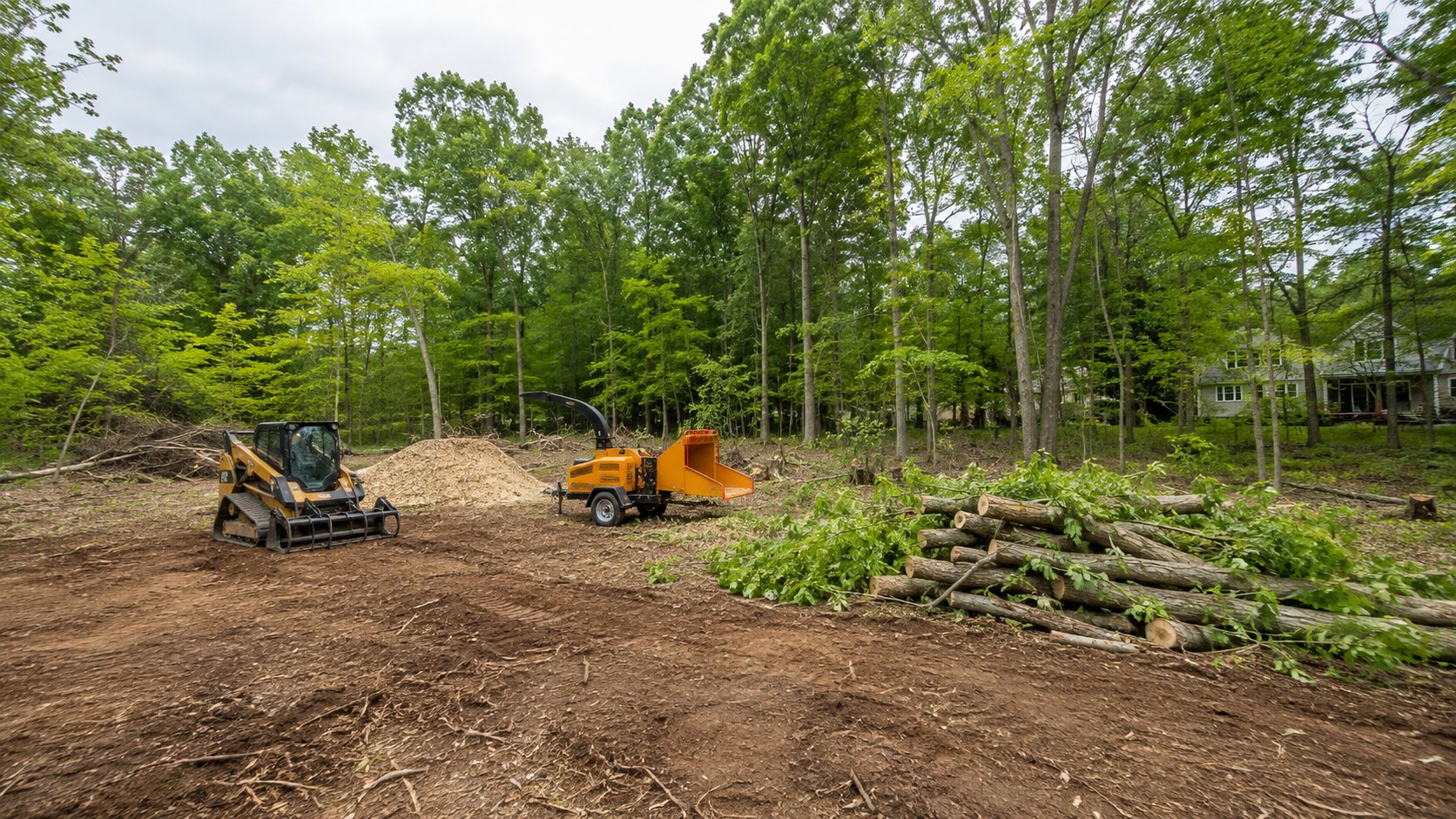
Selective land clearing removes specific trees and vegetation, the dead, diseased, crowded, invasive, or poorly placed material, while leaving healthy, well structured trees and the understory worth keeping. Full lot clearing takes everything down to open ground, usually paired with grading to create a level, buildable pad. Both are legitimate; they suit different properties. The trap is defaulting to full clearing because it looks simpler, when the property in front of you may be telling you to keep far more than you remove.

Signals that point toward selective clearing

Some lots ask to be thinned rather than stripped. Look for mature, structurally sound hardwoods that give you shade, screening, and privacy. On a slope or near a stream, established root systems hold soil in place, and pulling them all out at once invites erosion. And if the structure, driveway, and utilities occupy only part of the lot, there is no reason to clear the rest.

Signals that point toward full clearing

Other lots call for a clean slate. Dense scrub choked with invasive vines, thickets of low grade stems, and stands with no specimen trees worth saving offer little to preserve. If the building envelope, grading, and access will occupy most of the lot anyway, selective work only slows things down. And when the trees across a parcel are declining or hazardous as a group, taking them down together is the honest call. Even then, full clearing is the bigger disturbance and more likely to cross the thresholds below, so it should be deliberate, not a default.

The part most people get wrong: the trees you keep are the ones at risk

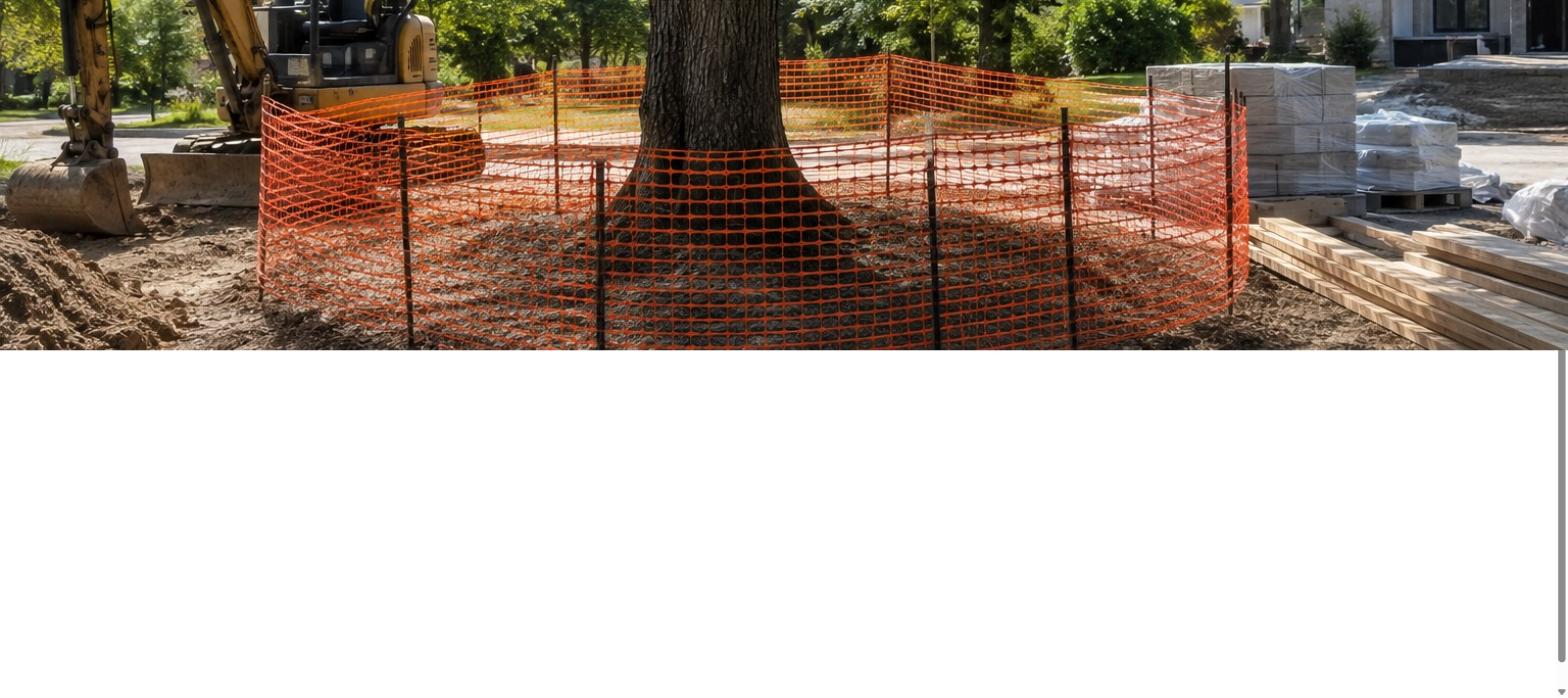
This is where selective clearing quietly succeeds or fails: deciding to keep a tree is not the same as protecting it. What kills preserved trees usually is not the saw. It is the equipment, grading, and soil changes around them, and it shows up slowly. University extension guidance from the Texas A&M Forest Service explains that adding fill to the root zone limits the amount of oxygen and moisture available to the roots, and that grade changes affect a tree either by removing roots when the grade is lowered or suffocating them when the grade is raised. The same guidance warns that it may take several years for trees to overcome and adjust to the injury and site changes that occur during construction. A tree can look fine the season the work wraps up and be dead a few years later. That is why real selective clearing protects the critical root zone, commonly fenced at roughly one foot of radius for every inch of trunk diameter, so machines stay out from under the trees you kept.

How Maryland’s rules tilt the decision

Two Maryland layers can turn a clearing into a reviewed, permitted project. The first is about soil and water. The Maryland Department of the Environment requires erosion and sediment control plans to be reviewed and approved for earth moving activity that disturbs 5,000 square feet or more of land area or 100 cubic yards or more of soil. By retaining soil on site, sediment and nutrients are prevented from running off the disturbed area and polluting streams and other surface waters, central to Maryland’s effort to protect the Chesapeake Bay. The second layer is forest. Under Montgomery County’s Forest Conservation Law, owners of properties greater than 40,000 square feet who must submit a development application or obtain a sediment control permit fall under the law, and anyone subject to it must meet a calculated forest retention or forest planting requirement. Selective clearing that leaves mature, healthy forest standing can help satisfy that retention, while scraping a lot bare can leave you replanting later. The law does not reach a single yard tree that is not part of a forest. Because these thresholds can change, confirm the current rules with Montgomery County and the state before you finalize a plan.

What happens below the surface: grubbing and debris

Clearing only settles what happens above ground; the selective versus full choice decides the work left underneath. Full clearing for construction almost always needs grubbing, the step that pulls out roots, buried stumps, and organic material so the ground does not settle or resprout under a future foundation, driveway, or lawn. Selective clearing usually needs far less, because most root systems stay in place doing their job. When we scope a project, land grubbing and debris removal is a separate part of the plan from the clearing itself, and the amount you need is one more reason the decision matters before any work begins.

How we help you decide what your property needs

The best decisions come from walking the lot, not a satellite view. We separate what has to go from what is worth saving, read the slope and drainage, weigh the sediment and forest thresholds, and check whether the trees you want to keep can survive the work. If you are weighing selective land clearing against clearing a lot entirely around Burtonsville, that walkthrough is the fastest route to a plan you will not regret.

Frequently Asked Questions About Selective Land Clearing

What is the difference between selective land clearing and full lot clearing?

Selective land clearing removes only what needs to go, the dead, diseased, crowded, invasive, or poorly placed growth, while leaving healthy trees and understory in place. Full lot clearing takes everything down to open ground for a level, buildable pad. Selective clearing keeps shade, screening, and the roots that hold soil, while full clearing gives you a blank slate in exchange for more disturbance.

Is selective land clearing better for the environment?

It usually disturbs less. Keeping established root systems in place helps hold soil, which reduces the erosion and runoff Maryland works to keep out of streams and the Chesapeake Bay. On qualifying properties, standing forest can also help meet county retention requirements. The right choice depends on your lot and what you are building.

Will clearing my lot require a permit in Maryland?

It can, depending on scope. The Maryland Department of the Environment requires an approved erosion and sediment control plan for earth moving activity that disturbs 5,000 square feet or more of land area or 100 cubic yards or more of soil. On properties greater than 40,000 square feet that need a development application or a sediment control permit, Montgomery County’s Forest Conservation Law also applies. Requirements change, so confirm the current rules with the county and the state before you start.

Can trees I keep during clearing still die afterward?

Yes, and it is common and avoidable. The Texas A&M Forest Service notes that adding fill over the root zone limits the oxygen and moisture roots receive, and that lowering or raising the grade can remove or suffocate roots. The decline is often delayed, and it may take several years for a tree to show construction injury. Protecting the critical root zone, typically fencing about one foot of radius per inch of trunk diameter, is how you keep preserved trees alive.

Do I need grubbing if I only do selective clearing?

Usually much less than a full clearing requires. Grubbing pulls out roots, stumps, and buried organic material so the ground does not settle or resprout, and it is essential where a foundation, driveway, or lawn is going in. With selective clearing most root systems stay in place on purpose, so grubbing is limited to the stumps actually removed.

Weighing selective clearing against clearing a lot completely around Burtonsville? The team at Hometown Tree Experts will walk your property, read the signals, and map a clearing plan that protects what is worth keeping. Reach out to us and we will help you decide the right approach from the start.


Do You Need a Permit to Clear a Lot in Maryland?

By Hometown Tree Experts

Most homeowners picture lot clearing as a purely physical job: bring in a crew, take down the trees, haul off the brush, done. In Maryland, there is a step that comes before any of that, and it catches people off guard. Past certain sizes, clearing land is not just work you schedule, it is a permitted, plan-reviewed activity regulated by the state and the county. We have cleared enough overgrown lots around Burtonsville, Silver Spring, and the rest of Montgomery County to know that the paperwork can start well before the first tree comes down. Here is when a permit is actually required in Maryland, what the review involves, and how to plan a clearing so the approvals do not blindside you.

Clearing a lot in Maryland is often a regulated activity

The instinct is to treat a wooded lot as private property you can simply clear at will. For a small job that can be true, but the rules scale up quickly with the size and character of the clearing. Maryland has two separate layers of regulation that can apply to a lot clearing project, and they are triggered by different thresholds. One is about protecting soil and waterways during the work. The other is about protecting forest. A lot can fall under one, both, or neither, and knowing which applies to your property is the difference between a smooth project and a stop-work order.

None of this means you cannot clear your land. It means the clearing has to be planned and, past a point, approved. The property owners who run into trouble are almost always the ones who started cutting first and asked questions later. The ones who have a good experience start by understanding which line their project crosses.

Sediment and erosion control: the 5,000 square foot line

Start with the ground itself. The Maryland Department of the Environment requires an approved erosion and sediment control plan for any earth-disturbing activity that affects 5,000 square feet or more of land, or that moves 100 cubic yards or more of earth. That threshold is smaller than most people expect. An acre in Maryland is 43,560 square feet, so 5,000 square feet is only about a tenth of an acre. Clear and grub a modest wooded corner of a suburban lot and you can cross that line, which means an approved plan and a grading permit before the disturbance begins, along with the erosion controls the plan calls for.

This layer exists because bare, freshly cleared soil washes into storm drains and streams when it rains, and Maryland takes runoff into the Chesapeake Bay watershed seriously. For a homeowner, the practical takeaway is simple: if your clearing will disturb more than roughly a tenth of an acre of ground, assume sediment and erosion control is part of the job, and plan for the permit rather than around it.

The Maryland Forest Conservation Act and the 40,000 square foot line

The second layer is about the trees themselves, and it is the one that surprises people the most. The Maryland Forest Conservation Act applies statewide. When a project on a tract of 40,000 square feet or greater triggers a subdivision, site plan, grading, or sediment control application, it generally falls under the Act and requires a Forest Stand Delineation, which is a survey of the existing forest, followed by a Forest Conservation Plan that spells out how forest will be preserved or replaced.

Here in Burtonsville, the county version applies. Montgomery County’s Forest Conservation Law covers properties greater than 40,000 square feet, which is just under one acre, when the owner needs a development or sediment control approval. Cross that threshold on a qualifying project and clearing forest is no longer a simple removal. It becomes a reviewed action with delineation, a plan, and conservation obligations attached. Because these thresholds and requirements can change, confirm the current rules with Montgomery County and the Maryland Department of the Environment before you finalize any plan.

What forest conservation can require

When a project falls under the Forest Conservation Law, removing forest is not the end of the conversation. Depending on the plan, you may be required to preserve a portion of the existing forest, replant, or otherwise mitigate the forest that comes out. In other words, the review does not just ask whether you can clear. It shapes how much you clear, what you keep, and what you put back. For a property owner, that is a strong reason to plan the clearing deliberately rather than defaulting to taking everything down.

There is one important boundary that keeps this in perspective. Montgomery County’s Forest Conservation Law applies to forest on qualifying properties. By its own terms, it does not regulate the removal of street trees or individual trees that are not part of a forest. So a homeowner taking down a single hazard tree in the yard is in a completely different situation from someone clearing a wooded half acre for a build. The rules scale up with the scope of the clearing, which is exactly why the size and character of your lot decide whether a permit is in play at all.

A single tree is not a lot clearing, and the rules know the difference

This distinction matters because the two jobs get talked about as if they were the same. Removing one dead oak near the driveway is routine tree work. It does not delineate a forest or trigger a conservation plan. Clearing a dense, wooded parcel to open it up for construction is a land-disturbing project that can cross both the sediment control and forest conservation thresholds at once. If you are unsure which category your property falls into, that uncertainty is itself a good reason to talk to a crew that works in Montgomery County regularly and knows how these thresholds are read locally. When we handle a project like this, we scope it as a real lot clearing service in Burtonsville, MD, which means understanding the regulatory picture before we ever start cutting, not after.

Selective clearing can simplify the approvals

Not every lot needs to be scraped bare, and the level of clearing you choose can change how the rules apply to you. Selective clearing, where a crew removes dead, crowded, or poorly placed trees while leaving healthy specimens and the understory you want to keep, preserves shade, privacy, and property value, and it can also reduce the amount of forest you are removing under a conservation plan. Full clearing, where everything comes down to open ground, is more disturbance and more likely to trip the thresholds above.

A good crew will walk the lot with you and separate what has to go from what is worth saving, and in a county with a forest conservation program, keeping mature, structurally sound trees can work in your favor during review. Below the surface, grubbing is a separate step from clearing: clearing removes what is above ground, while land grubbing and debris removal pulls out the roots, buried stumps, and organic material that would otherwise settle or resprout under a future lawn, driveway, or foundation. If your lot is being cleared for construction, grubbing is usually part of the plan, and it is one more reason to map the whole project, and its approvals, before work starts.

Plan the approvals before the first tree falls

The homeowners who have the smoothest lot clearing projects in Maryland are the ones who treat the permitting as the first task, not an afterthought. Before anything comes down, it is worth knowing whether your clearing will disturb 5,000 square feet or more, whether your property crosses the 40,000 square foot forest conservation line, and what your county requires as a result. Getting those answers first prevents the worst outcome, which is a project halted partway through because a required plan was never filed. A crew that works in your area can help you understand which approvals apply to your specific lot and sequence the work around them. If you are planning to clear a wooded property around Burtonsville, you are welcome to reach out to us and we will help you plan it the right way from the start.

Frequently Asked Questions About Lot Clearing Permits in Maryland

Do I need a permit to clear a lot in Maryland?

Often, yes, depending on how much land you disturb and how large the property is. The Maryland Department of the Environment requires an approved erosion and sediment control plan, and a grading permit, for earth-disturbing activity of 5,000 square feet or more, or 100 cubic yards or more of earth movement. On tracts of 40,000 square feet or greater, a project that triggers a subdivision, grading, or sediment control application can also fall under the Forest Conservation Act. Requirements vary by scope and location, so confirm with Montgomery County and the state before you start.

What is a Forest Stand Delineation and a Forest Conservation Plan?

They are the two documents the Forest Conservation Act generally requires on qualifying projects. A Forest Stand Delineation is a survey of the existing forest on the property, and a Forest Conservation Plan spells out how that forest will be preserved, replaced, or otherwise mitigated as part of the clearing. Together they turn a clearing into a reviewed, planned action rather than a simple removal.

Does the Forest Conservation Act mean I have to replant trees I remove?

On qualifying projects, it can. Properties greater than 40,000 square feet that trigger a development or sediment control approval fall under Montgomery County’s Forest Conservation Law, which may require preserving, replanting, or otherwise mitigating forest that is removed. The removal of a single non-forest tree or a street tree is treated differently and is generally not regulated the same way.

Do I need a permit to remove a single tree in my yard?

Generally no, not under the forest conservation rules. Montgomery County’s Forest Conservation Law applies to forest on qualifying properties, and by its own terms it does not regulate the removal of individual trees that are not part of a forest, or street trees. Taking down one hazard tree in your yard is different from clearing a wooded lot. If your project is larger or near the size thresholds, it is worth confirming with the county.

What is the difference between clearing and grubbing?

Clearing removes what is above ground, the trees, brush, and vegetation. Grubbing goes below the surface to pull out roots, buried stumps, and organic material. For lots being cleared for construction, grubbing is usually necessary so the ground does not settle or resprout later, and because it disturbs more soil it can factor into the sediment control requirements for the project.

Planning to clear a wooded lot around Burtonsville? Knowing which permits and plans apply to your property before you start is the single best way to keep the project on track. Reach out to Hometown Tree Experts and we will walk your lot with you and map out the right approach.


Protecting Trees During Construction: Why the Damage You Can’t See Kills Mature Trees Years Later

You are planning a construction project, an addition, a new driveway, a pool, a big renovation, and there is a beautiful mature tree on the property you fully intend to keep. The crew works around it, the trunk is never so much as scratched, and when the project wraps the tree looks exactly as it did before. Then, three or four years later, it starts thinning out, dropping limbs, and quietly declining, and nobody connects it to the construction because that finished a long time ago.

This is one of the most common and most preventable ways mature trees are lost around Maryland. The good news is that a tree can almost always be protected through a project, but it has to happen the right way and at the right time. Here is what actually damages a tree during construction, and how to protect one before the first machine ever arrives.

The Damage Happens Underground, Where You Can’t See It

The reason construction can kill a tree the trunk never touched is that the most vulnerable part of a tree is its roots, and they are almost entirely out of sight. Most of a tree’s roots live in the top eighteen inches of soil, and roughly 85 percent of the root system sits within what arborists call the critical root zone, an area that reaches out to the edge of the canopy and often well beyond it. Those roots are how the tree takes up water, feeds itself, and stays anchored. Damage enough of them and the tree is in real trouble, even when everything above ground still looks fine.

What makes this so easy to miss is the delay. A tree can coast for a while on stored energy, so the decline from root damage often does not show up for three, five, or more years, long after the project is finished and forgotten. By the time the canopy thins and limbs start dying back, almost no one links it to construction that ended years earlier. That lag is exactly why this kind of damage is usually caught too late to reverse.

The Three Ways Construction Kills a Tree

Arborists trace nearly all construction tree loss to three causes, and understanding them is what makes the damage avoidable.

The first and most common is soil compaction. When heavy equipment, trucks, or even repeated foot traffic pass over the root zone, they compress the soil and squeeze out the pore space that roots depend on for oxygen and water. Compacted soil slowly suffocates and starves the roots. Maryland’s clay-heavy soils compact especially easily and drain slowly, which makes this worse here than in sandier regions, and even stockpiling soil or building materials on the root zone for just a few days can do lasting harm.

The second is grade changes, which are more dangerous than they sound. Adding fill over the roots, even a few inches, buries and smothers them and traps moisture against the trunk where it invites rot. Cutting the grade down slices through roots and exposes the rest. A change that looks minor to a grading crew can quietly cut off a tree’s water supply and its stability.

The third is root severance, usually from trenching. Digging a trench for a utility line, a drain, or an irrigation system straight through the root zone cuts major structural roots. That robs the tree of a portion of its root system and can leave it unstable and far more likely to fail in a storm.

How Big the Protected Zone Really Needs to Be

The single biggest mistake is protecting a circle that is much too small, just the trunk and a few feet around it. A tree’s roots spread out past the dripline, the edge of the branches, so the zone that actually needs protecting is far larger than most people assume. A common arborist rule of thumb is to protect a radius of about one foot for every inch of the trunk’s diameter, and for a valuable mature tree, wider is better. The whole area inside that zone, not just the base of the trunk, is what has to be kept safe.

What a Real Tree Protection Plan Looks Like

Protecting a tree through construction is not complicated, but it only works if it happens before the work starts, not after something goes wrong. The steps that actually make the difference:

Bring in a certified arborist during planning, not after. Small changes to where the addition, driveway, or utility line goes can decide whether a tree survives, and those changes are only possible before the plans are locked in. Then decide which trees are genuinely worth protecting, because a healthy, well-placed mature tree is worth real effort while one already in decline may not be, and an honest assessment focuses the protection where it pays off.

Before anything else happens on site, fence the tree protection zone. Sturdy, visible fencing goes up around the full root zone ahead of demolition, grading, or deliveries, with clear no-entry signage. If crews can move the fence or stash materials inside it, it will not work. Keep that zone completely off limits: no equipment, no parking, no material or soil storage, no trenching, and no grade changes inside the fence, with a three-inch layer of mulch over the area to protect and cushion the soil. Where a utility line cannot avoid the root zone, boring or tunneling beneath the roots instead of open trenching preserves the structural roots, and if any roots must be cut, an arborist should make clean cuts. Finally, keep the tree healthy and watered going into the project, since a healthy tree handles the stress far better, and have it monitored for a few years afterward so early decline gets caught while something can still be done about it.

Why This Is Worth Doing Right

A mature oak, maple, or specimen tree represents fifty, seventy, or a hundred years of growth that no amount of money can put back on any reasonable timeline, and a healthy one adds real value to a property. Once construction damage pushes a tree into decline, the slide is usually slow, expensive to fight, and often impossible to reverse, and it can end with removing the very tree the project was built around. That is why preservation is a planning discipline, not a repair job. If you have a construction, renovation, or landscape project coming up near trees you want to keep, our certified arborists can assess the trees, build a protection plan before the work begins, and give them the best possible chance of coming through it intact. You can learn more about our approach to tree preservation, and if a tree ever starts showing the signs of decline, the sooner it is looked at, the better the odds of saving it.

Frequently Asked Questions About Protecting Trees During Construction

Can a tree die from construction even if the trunk is never damaged?

Yes, and it is one of the most common ways mature trees are lost. Most of the harm happens underground, out of sight, when roots are compacted, buried, cut, or exposed during the work. The tree can look completely normal when the project ends and still slide into decline years later because its root system was quietly damaged.

How long after construction does tree damage show up?

Often not right away. It can take three, five, or more years for a tree to show the effects of construction damage, because it coasts for a while on stored energy before the decline becomes visible. That delay is why the damage is so often missed, since by the time the tree thins out or drops limbs, few people connect it to a project that finished years earlier.

How large should the tree protection zone be?

Larger than most people expect. A tree’s roots extend well past the edge of its branches, so protecting just the trunk and a few feet around it is not enough. A common arborist guideline is to protect a radius of about one foot for every inch of trunk diameter, and for a valuable mature tree, protecting a wider area is better. The goal is to fence off the whole root zone, not just the base.

What are the most damaging construction activities for trees?

The three biggest are soil compaction from equipment, vehicles, and material storage over the root zone; grade changes that bury or expose roots; and trenching that cuts through structural roots. Maryland’s clay soils make compaction especially damaging because they compress easily and drain slowly. Keeping equipment, storage, digging, and grade changes out of the root zone prevents most of it.

When should I bring in an arborist for a construction project?

As early as possible, ideally during the planning phase before the design is finalized. Small adjustments to where a building, driveway, or utility line goes can determine whether a tree survives, and those adjustments are only possible before work begins. An arborist can identify which trees are worth protecting and build a protection plan around them from the start.

What Happens After Stump Grinding: The Roots, the Settling, and Planting There Again

The grinder finishes, the stump is gone, the ground is raked smooth and seeded, and the job looks done. But grinding the stump is only the visible half of the story. Below the surface, the tree’s entire root system is still there, and over the next few months and years it quietly does things that surprise a lot of homeowners. The ground sinks. Grass sometimes struggles to fill in. Once in a while, a few green shoots appear where the tree used to be.

None of that means the job was done wrong. It is just what happens underground after a stump is ground, and knowing about it ahead of time makes the difference between a spot that turns out great and one that frustrates you. Here is what actually goes on beneath a ground stump, and what it means if you want to seed, plant, or build on that spot.

Grinding Removes the Stump, Not the Roots

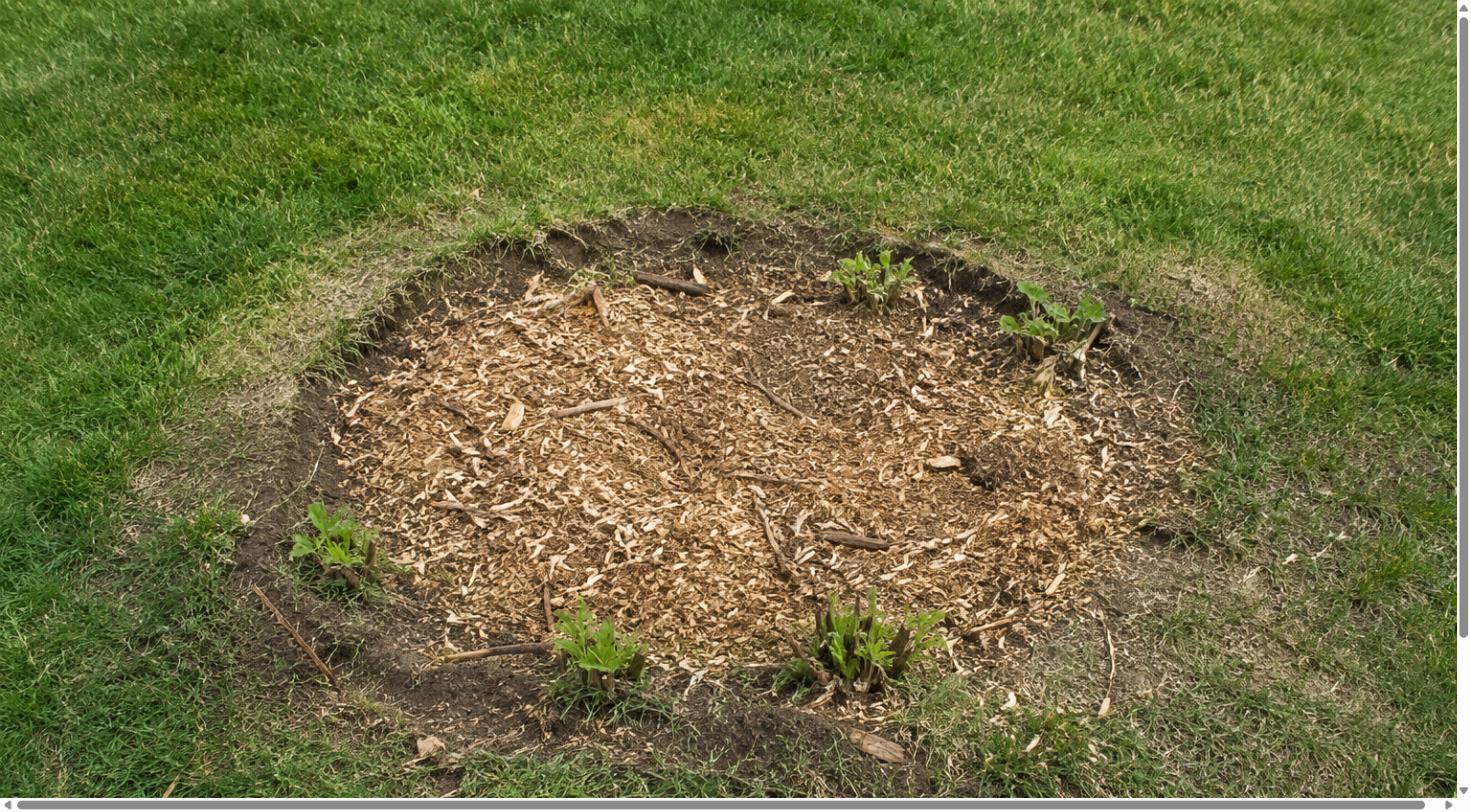
A stump grinder chews the stump and the root flare down below ground level, and we grind at least six inches down, deeper on request, turning that wood into a mix of chips and soil. What it does not do is pull the tree’s roots out of the ground. Those lateral roots, which often spread out as far as the branches once reached, stay right where they are and begin to decay slowly. That is normal, and it is how grinding is meant to work. It is far less invasive than digging the whole root system out. But it does mean the removal you can see is sitting on top of a root system you cannot, and that hidden part is what shapes everything that happens next. The stump is usually what is left over after a tree removal, so the roots below it can be substantial.

Why the Ground Sinks, and What to Do About It

As those buried roots and any leftover ground wood break down over months and years, they leave small voids behind, and the soil on top settles down into them. A spot that was perfectly level the day we left can develop a shallow dip over the first year or two. This is expected, not a defect. The fix is easy: keep an eye on the area and top it up with soil, then reseed, a couple of times as it settles, until it holds a level grade. How long the settling goes on depends mostly on the tree. Softwoods like pine break down within a few years, while dense hardwoods like oak and maple can take five to ten years or longer, faster in warm, moist soil and slower in dry ground.

What to Do With the Grindings

Grinding produces a surprising amount of material, usually more than the stump looked like it held, because the chips fluff up as they come off. You have two options, and we will do whichever you prefer: haul the grindings away, or use them to help fill the hole and top it with soil. One thing is worth understanding, though. Fresh wood chips are not soil, and they should not be treated like it. Piled into the ground where you want to grow something, they cause a temporary problem we will get to in a moment. Spread on top as a surface mulch a few inches deep, kept off the stems of plants, they are perfectly useful.

The Nitrogen Problem That Trips Up New Plantings

This is the one that catches people off guard. When wood decomposes, the microbes doing the work pull nitrogen out of the surrounding soil to power the process, which temporarily leaves that spot short of the nitrogen new plants depend on. It is why grass seed sown straight into a bed of grindings often comes up thin and yellow, and why a new plant tucked into leftover chips sits and sulks instead of growing. The effect is temporary, but it is real. The way around it is to keep a mass of fresh chips out of the growing zone: clear them out, backfill with quality topsoil, and if you are seeding a lawn, a nitrogen-rich fertilizer helps the grass establish while the last of the wood breaks down.

Can You Plant a New Tree Where the Old One Was?

Yes, though usually not right in the same hole, and it is worth planning for. Three things work against a new tree planted directly over an old ground stump. The old roots are still there, occupying the space the new roots need to spread. The decaying wood ties up nitrogen and can cause drainage problems right where the new tree sits. And standard grinding depth is shallower than a new tree’s root ball really wants. The simplest arborist advice is to plant the new tree three to six feet away from the old spot, in undisturbed soil, if the layout allows. If it has to go in exactly the same place, we can grind deeper or excavate the area, clear out the chips and old root material, and backfill with good topsoil so the new tree has both room and nutrients to get established. Starting with a smaller, younger tree helps it settle in faster too. If your goal is to get the roots out entirely rather than just grind the stump, that is a different service, and it is worth understanding how grinding compares to full stump removal before you decide.

Will the Stump Grow Back?

For almost every tree, no. Grinding the stump and root flare below grade kills the stump, so it cannot push out fresh growth the way a stump that was only cut can. The main exception is a handful of especially vigorous species, some maples and poplars among them, that can occasionally send up suckers from the roots still in the ground. If that does happen, the shoots are easy to cut back or treat, and they stop for good once the roots finish dying off. The most useful thing you can do is tell us what kind of tree it was when we grind the stump, so we can flag whether suckering is even a possibility and handle it up front rather than leaving you to deal with surprise sprouts.

Making the Spot Usable Again

Whether you are picturing lawn, a garden bed, a patio, or a brand new tree, the place where a stump was ground can absolutely become useful again. It just helps to know what is happening underneath so you set it up the right way. For a patio or anything structural, it is usually worth either waiting for the root mass to break down or having the area properly excavated and compacted first, so you do not end up with the ground settling under your hardscape later. And if you have a stump you want gone, or one that was ground somewhere else and left you with a sinking, struggling patch, our stump removal team can grind it correctly, clear the roots when the plan calls for it, and set the spot up for whatever you want to put there next.

Frequently Asked Questions About Stump Grinding

Do tree roots die after stump grinding?

Yes, eventually. Grinding kills the stump, and the roots left in the ground gradually decay over time with the help of soil microbes, fungi, and insects. As they break down they actually return nutrients to the soil. The process is slow, though, taking a few years for softer woods like pine and five to ten years or more for dense hardwoods like oak and maple.

Why is the ground sinking where my stump was ground?

Because the roots and ground-up wood left below the surface are decaying and leaving small voids, and the soil on top settles into them. This is normal after stump grinding and usually shows up over the first year or two. Topping the area up with soil and reseeding a couple of times as it settles will keep it level.

Can I plant grass over a ground stump?

Yes, but prepare the spot first. Grass seeded directly into leftover wood grindings often comes in thin and yellow because the decomposing wood temporarily ties up nitrogen in the soil. Clearing out the grindings, backfilling with quality topsoil, and adding a nitrogen-rich fertilizer before seeding gives the lawn what it needs to fill in evenly.

Can I plant a new tree where a stump was ground?

Usually not directly in the same hole without some prep. The old roots still occupy the space, the decaying wood ties up nitrogen, and standard grinding is shallower than a new tree needs. It is best to plant three to six feet away in undisturbed soil, or to have the spot ground deeper or excavated and backfilled with topsoil if the new tree has to go in the same place.

Will a ground stump grow back?

For almost all trees, no, because grinding kills the stump. A few aggressive species, such as some maples and poplars, can occasionally send up suckers from the remaining roots, but those shoots are easy to deal with and stop once the roots die. Telling your arborist the tree species helps them anticipate it.

Do You Need a Permit to Remove a Tree in Maryland? The Right-of-Way Rule That Catches Homeowners Off Guard

You have a tree you want gone. Maybe it is too close to the house, maybe it drops limbs, maybe you just want the light back. So you get a couple of quotes, and the conversation goes straight to price and scheduling. But in Maryland there is a question that should come first, and almost no one asks it: are you actually allowed to remove that tree?

Most of the time the answer is yes. But for a meaningful number of trees, especially the ones near the street, removing without a permit can leave you facing a fine and an order to plant a replacement. We do tree work across Montgomery, Prince George’s, and Howard counties, so here is the honest, Maryland-specific picture of when a tree removal permit is required and when it is not.

The Question to Ask First: Where Is the Tree?

The single thing that decides whether you need a permit is not the size of the tree or the reason you want it gone. It is location. Maryland draws a hard line between trees on your own private property and trees in the public road right-of-way, and the two are governed by completely different rules.

The tricky part is that the right-of-way is not always where people think. It often extends several feet in from the curb, which means the tree you have mowed around for years, the one between the sidewalk and the street, may not legally be yours to remove at all. That is where most homeowners get caught.

Street and Right-of-Way Trees: The Maryland Roadside Tree Law

Maryland has protected roadside trees since 1914. Under the Maryland Roadside Tree Law, a permit from the Department of Natural Resources is required to plant, prune, or remove any tree in the public road right-of-way, which includes streets and roads maintained by the state, the county, and local towns.

In Montgomery County it goes a step further. Street trees are covered by both the county’s Roadside Tree Protection Law and the state law, so two permits are required, one from the county and one from the state, before a street tree can be removed. And if a street tree comes out, both laws require a replacement to be planted. Prince George’s County follows the same basic principle: it is unlawful to remove a public right-of-way tree without a DNR roadside tree permit, and the county has to sign off as well.

The penalty side is real. Performing tree work in the right-of-way without the required permit can bring a fine or a more serious penalty from the DNR. So the cheap crew that shows up, drops the street tree, and leaves is not saving you money. It is leaving you holding a fine and a replacement obligation.

Trees on Your Own Property

Here is the good news, and the part the scare stories leave out. If the tree is fully on your private property, away from the road right-of-way, and it is not part of a protected forest stand or a specific local program, you generally do not need a state permit to remove it. For most backyard trees, the call is yours.

There are a few exceptions worth checking before you assume you are clear. Large land-disturbing projects can trigger Montgomery County’s forest conservation and tree canopy rules. Some incorporated towns and historic districts have their own tree ordinances. And many homeowners associations have rules about removing significant trees. None of these is a reason to panic, but each is a quick phone call that is far cheaper than a violation, and a licensed local company can usually tell you in minutes which bucket your tree falls into.

The Hazard Exception: When a Dangerous Tree Can Come Out Now

Permits take time, and a tree that is actively failing does not wait. Maryland’s rules account for this. If a Licensed Tree Expert or certified arborist determines that a tree is hazardous, the hazardous condition can be removed right away to protect people and property. The catch is that the expert has to notify the appropriate agency in writing within fourteen days, and anything beyond what was needed to remove the hazard still requires the normal permits.

This is one more reason the assessment matters. A tree risk assessment by a qualified arborist is what establishes that a removal qualifies as an emergency rather than an unpermitted cut, and it is exactly the call we make before any emergency tree removal near the right-of-way.

How We Handle the Permit Side for You

You should not have to memorize Maryland’s tree code to get a tree taken down. That is part of what you are hiring a licensed local company to handle. Because we work across Montgomery, Prince George’s, and Howard counties every week, we know which trees sit in the right-of-way, which permits apply, and how to pull them, and we will tell you up front if your tree needs one before any saw touches it.

If you have a tree you are thinking about removing and you are not sure whether it is yours to remove, that is exactly the kind of question to ask first. Our professional tree removal team will walk the property, sort out the permit question, and give you an honest answer. Call us at 301-250-1033 for a free estimate.

Frequently Asked Questions About Tree Removal Permits

Do I need a permit to remove a tree on my own property in Maryland?

Usually not. If the tree is entirely on your private property, away from the public road right-of-way, and not part of a protected forest or a specific local program, you generally do not need a state permit to remove it. Exceptions can apply for large land-disturbing projects, certain towns and historic districts, and HOA rules, so it is worth a quick check.

What is a roadside tree, and why does it need a permit?

A roadside tree is one growing in the public road right-of-way, which often extends several feet in from the curb. Under the Maryland Roadside Tree Law, a DNR permit is required to plant, prune, or remove any tree in that right-of-way, even when it is directly in front of your home.

Do I need a permit to remove a tree in Montgomery County?

For a street or right-of-way tree, yes, and you actually need two: one from Montgomery County and one from the State of Maryland, because the tree is covered by both the county and state roadside tree laws. Removed street trees also have to be replaced. A tree fully on your private property is a different situation and usually does not require these permits.

What happens if I remove a tree without a required permit?

Removing a right-of-way tree without the required permit can bring a fine or a more serious penalty from the Maryland DNR, and you may be ordered to plant a replacement. The unlicensed crew that removes it does not absorb that cost. You do.

Can I remove a hazardous tree without waiting for a permit?

Yes, within limits. If a Licensed Tree Expert or certified arborist determines a tree is hazardous, the hazardous condition can be removed immediately to protect people and property, but the expert must notify the appropriate agency in writing within fourteen days, and any non-hazardous work still needs the normal permits.

How to Hire a Tree Service in Maryland: The License, the Insurance, and the One Request That Exposes a Hack

If you are hiring a tree service in Maryland, the advice you will find online is almost entirely about price and danger: get a few quotes, do not try it yourself, here is what removal costs. All of that is true, but it skips the two things that actually decide how a tree job turns out in this state, and neither is on any cost calculator. The first is whether the company is legally allowed to touch your trees at all. The second is what happens if something goes wrong while they are forty feet up in your oak.

We have been doing tree work in Burtonsville and across the Maryland suburbs since 1997, and we have cleaned up after more than a few jobs that went sideways because a homeowner hired on price alone. So here is the honest version of how to hire a tree service in Maryland, starting with the rule most people have never heard of.

The Maryland Tree Expert License: Why “a Guy With a Chainsaw” Is Not Legal Here

Maryland is one of the few states that licenses tree work directly. Under state law, anyone who advertises or performs tree care for hire on trees over twenty feet tall must be a Licensed Tree Expert, licensed by the Maryland Department of Natural Resources. This is not a voluntary credential or a trade-association badge. It is a legal requirement, and operating or advertising tree services without it is illegal in Maryland.

The license exists specifically to protect you. To earn it, a tree expert has to document real experience, pass a state exam on tree care and tree law, and, crucially, carry liability and property damage insurance plus workers compensation. The license and the insurance are tied together. A company that is not licensed is almost certainly not carrying the coverage the license requires either.

Here is why that matters in plain terms, and it comes straight from the DNR’s own guidance: if an unlicensed operator does your tree work and something goes wrong, such as a tree falling on your house, it can be very difficult to hold them liable. You are left holding the damage. Hiring a Licensed Tree Expert gives you a state-backed standard and a regulator you can actually call.

What “Insured” Actually Protects You From (and Why the Cheap Quote Skips It)

“Licensed and insured” is on every tree company’s website, but most homeowners never stop to think about what the insurance is actually for. It is not paperwork. It is the line between a routine job and a financial disaster on your property.

Tree work is genuinely one of the most dangerous trades there is: chainsaws, climbers high in the canopy, and heavy limbs dropping near houses and power lines. Two kinds of coverage protect you. General liability covers damage to your property, or your neighbor’s, if a limb or a whole tree comes down the wrong way. Workers compensation covers the crew if someone is hurt on your property. Without it, an injured worker’s medical bills can come looking for the homeowner, because the accident happened on your land.

This is also the hidden reason the lowball quote is so cheap. Real insurance and licensing cost money, and they get priced into every legitimate bid. A quote that comes in dramatically under everyone else is usually not a better deal. It is a company that skipped the coverage, which means the risk did not disappear, it just moved to you.

If They Offer to Top Your Tree, Walk Away

There is one request, and one offer, that instantly tells you whether you are dealing with a real arborist or someone who just owns a chainsaw. It is topping.

Topping is cutting a tree’s main branches back to stubs to make it shorter, and homeowners often ask for it thinking it makes a tall tree safer or less likely to come down in a storm. It does the opposite. The arboricultural consensus, backed by the International Society of Arboriculture, is unambiguous: topping is one of the most harmful things you can do to a tree. It removes most of the tree’s food-producing canopy, stresses it severely, and triggers a flush of weak, fast-growing shoots that are far more likely to break later. A topped tree can grow back to its old height within a couple of years, weaker and more hazardous than before, and the large open wounds invite decay.

A Licensed Tree Expert will not top your tree. Instead they will talk to you about proper structural pruning, like crown reduction and thinning, which can genuinely reduce a tree’s size and risk while keeping it healthy. You can read how we approach that on our proper structural pruning page. The tell is simple: a company that offers topping as a service is telling you it does not follow the standards a licensed expert is held to.

What to Check Before Hiring a Tree Service in Maryland

You can vet a tree company in about ten minutes, and it is the cheapest insurance you will ever buy. Before you let anyone start work, do four things.

First, ask for their Maryland Tree Expert license number. A licensed expert carries a numbered card, and the DNR keeps a public list you can check, so the number is easy to verify. Second, ask for current proof of insurance, both liability and workers compensation, and make sure it is active. Third, get a written estimate that spells out the scope, because a verbal handshake leaves you exposed. Fourth, listen for the topping tell and look for certified arborists on the crew. A company that clears all four is the one worth hiring, even if it is not the cheapest number on your driveway.

That is the standard we hold ourselves to. As a licensed, insured Maryland tree care company, we will hand you our credentials before you commit to anything, and our professional tree service team is glad to walk your property and put the plan in writing. Call us at 301-250-1033 for a free estimate.

Frequently Asked Questions About Hiring a Tree Service

Does a tree service need a license in Maryland?

Yes. Under Maryland law, anyone who advertises or performs tree care for hire on trees over twenty feet tall must be a Licensed Tree Expert, licensed by the Maryland Department of Natural Resources. Working or advertising without the license is illegal, and the license requires the company to carry liability and workers compensation insurance.

How do I check if a tree company is a Licensed Tree Expert?

Ask for their Tree Expert license number. Licensed experts carry a numbered card, and the Maryland DNR maintains a public list of license holders you can check. A legitimate company will give you the number without hesitation.

Why is hiring an uninsured tree service risky?

Tree work is dangerous, and without insurance the risk lands on you. If an uninsured crew damages your property or a worker is injured on your land, you can be left responsible for the costs. Liability and workers compensation coverage are what keep a routine job from becoming your financial problem.

Is tree topping ever a good idea?

No. Topping, cutting branches back to stubs to shorten a tree, is one of the most harmful pruning practices there is. It stresses the tree, causes weak regrowth that breaks easily, and increases long-term hazard. Proper structural pruning, such as crown reduction, is the safe way to reduce a tree’s size.

How do I avoid tree service scams in Maryland?

Be wary of unsolicited door-knockers after storms, quotes far below everyone else, demands for large cash payments up front, and any company that cannot produce a Maryland Tree Expert license number and proof of insurance. Always get the estimate in writing before work begins.


Why Tree Trimming Services Are Essential For Healthy, Safe Trees

Trees are one of the most valuable features of any property, offering shade, beauty, and environmental benefits. However, without proper care, they can quickly become overgrown, unhealthy, or even hazardous. That’s where tree trimming services play a vital role.

Regular trimming is not just about appearance, it’s a key part of maintaining tree health, preventing damage, and keeping your property safe.

What Are Tree Trimming Services?

Tree trimming services provided by Hometown Tree Experts involve the careful removal of branches to improve a tree’s structure, health, and overall appearance. This includes eliminating dead or diseased limbs, shaping the tree, and ensuring balanced growth.

Professional trimming goes beyond simple cutting. It requires knowledge of tree biology, growth patterns, and proper techniques to avoid long-term damage.

Why Tree Trimming Matters

Many homeowners overlook trimming until a problem appears, but proactive care can prevent serious issues.

Tree trimming helps:

  • Remove dead or weak branches before they fall
  • Improve airflow and sunlight through the canopy
  • Reduce the risk of storm damage
  • Encourage healthy growth
  • Maintain a clean and attractive landscape

Regular maintenance ensures your trees stay strong and resilient year-round.

Signs Your Trees Need Trimming

Not sure when to schedule tree trimming services? Here are some common signs:

  • Overgrown branches touching your roof or power lines
  • Dead or hanging limbs
  • Uneven or dense canopy
  • Reduced leaf growth or signs of disease
  • Branches blocking walkways or views

Addressing these issues early helps prevent costly repairs and safety hazards.

Safety Benefits of Professional Trimming

One of the biggest advantages of hiring professionals is safety. Tree trimming can be dangerous, especially when dealing with large trees or branches near structures.

Experienced crews:

  • Use proper equipment and safety techniques
  • Identify weak or hazardous branches
  • Prevent accidental damage to your home or yard
  • Handle high or hard-to-reach areas

Professional tree trimming services reduce the risk of injury and property damage.

Improving Tree Health and Growth

Proper trimming supports long-term tree health. Removing diseased or damaged branches prevents problems from spreading and allows the tree to focus its energy on healthy growth.

Benefits include:

  • Stronger branch structure
  • Better resistance to pests and disease
  • Improved nutrient distribution
  • Longer lifespan for the tree

Healthy trees are more resilient and require fewer major interventions over time.

Enhancing Curb Appeal and Property Value

Well-maintained trees can dramatically improve your home’s appearance. Clean, balanced trees create a polished look that enhances your landscape.

Tree trimming services help:

  • Improve curb appeal
  • Increase property value
  • Create a more inviting outdoor space
  • Maintain a neat and organized yard

A well-kept landscape makes a strong first impression.

Why DIY Trimming Can Be Risky

While it may be tempting to handle trimming yourself, improper cuts can damage the tree or create safety hazards.

Common DIY risks include:

  • Over-pruning or incorrect cuts that weaken the tree
  • Lack of proper tools or equipment
  • Increased chance of injury
  • Missing signs of disease or structural problems

Hiring professionals ensures the job is done correctly and safely.

How Often Should Trees Be Trimmed?

The frequency of trimming depends on the tree type, age, and condition.

General guidelines:

  • Mature trees: every 2–3 years
  • Younger trees: more frequent shaping
  • Fast-growing species: annual maintenance
  • After storms: inspection and trimming as needed

Regular care helps maintain balance and prevents overgrowth.

Choosing the Right Tree Trimming Services

When selecting a provider, look for:

  • Experience and expertise
  • Proper licensing and insurance
  • Knowledge of local tree species
  • Positive customer reviews

A reliable company will assess your trees and recommend the best trimming approach for long-term results.

Final Thoughts

Trees are an important part of your property, but they require ongoing care to stay healthy and safe. Investing in tree trimming services helps protect your home, improve your landscape, and extend the life of your trees.

With regular maintenance and professional care, your trees can continue to thrive while enhancing the beauty and value of your property.

Frequently Asked Questions About Tree Trimming

What are tree trimming services?

Tree trimming services involve removing branches to improve tree health, structure, and appearance.

How often should trees be trimmed?

Most trees should be trimmed every 1–3 years, depending on their size and growth rate.

Is tree trimming necessary for healthy trees?

Yes. Regular trimming removes dead or diseased branches and promotes healthy growth.

Can I trim my trees myself?

Small tasks may be manageable, but large or complex jobs should be handled by professionals for safety.

The Role Of Professional Care In Long-Term Tree Health

Trees are a long-term investment that provide beauty, shade, and environmental benefits. However, maintaining tree health requires more than occasional attention. A reliable tree service plays a critical role in ensuring trees remain strong, safe, and vibrant for years to come.

By investing in professional tree care services, homeowners can protect their landscape, improve property value, and promote the health and longevity of their trees.

Understanding the Importance of Tree Health

Maintaining tree health is essential for ensuring that trees not only survive but thrive. Healthy trees contribute to a balanced ecosystem, improved air quality, and a more attractive landscape.

Trees face environmental stressors such as pests, diseases, and weather conditions. Early detection of signs of disease helps ensure trees remain strong and stable.

What Proper Tree Care Really Involves

Effective tree care involves proper pruning, watering, and monitoring tree roots and structure. Trees require consistent attention to support their growth and vitality.

Professional tree care services ensure that trees receive tailored care based on their species and condition.

The Role of Arborists in Tree Care

Arborists are trained professionals who specialize in tree biology and care. A certified arborist understands how to assess tree structure and identify potential issues early.

Professional arborists bring the expertise needed to manage diseases, pests, and overall tree health.

How Trees Enhance Your Landscape

Trees are a key component of any landscape. Well-maintained trees enhance curb appeal and contribute to a cohesive outdoor environment.

Strategic placement ensures trees complement your property without creating structural issues.

Supporting Tree Health and Longevity Over Time

The health and longevity of your trees depend on consistent care and maintenance. Preventative care helps protect trees from diseases, pests, and environmental damage.

Identifying and Preventing Tree Hazards

Unmaintained trees can become a serious hazard. Dead branches, weak structure, or diseased limbs can pose risks to people and property.

Regular inspections help reduce the risk of damage.

Why Tree Health and Longevity Go Hand in Hand

Tree health and longevity are closely connected. With proper care, trees remain resilient and continue to provide long-term benefits.

Why Professional Tree Care Services Matter

Professional tree care services are essential for maintaining healthy trees. These services include pruning, trimming, and ongoing care strategies.

What a Reliable Tree Service Provides

A trusted tree service offers comprehensive solutions such as trimming, maintenance, and removal. These services help ensure safety and long-term tree health.

The Importance of Regular Tree Maintenance

Regular tree maintenance helps prevent issues before they become costly problems. It supports long-term growth and structural integrity.

How Professional Arborists Protect Your Trees

Professional arborists provide expert evaluations and care plans that ensure trees remain healthy and stable.

When Tree Removal Becomes Necessary

Sometimes tree removal is required when a tree becomes hazardous or diseased beyond recovery. Removing unsafe trees protects your property.

Enhancing Your Property With Proper Tree Care

Proper tree care helps enhance the overall look and feel of your property while improving safety.

Managing Pest Issues in Trees

Pests can weaken trees and impact their structure. Early intervention helps protect long-term tree health.

Preventing and Treating Tree Diseases

Tree diseases can spread quickly if not managed. Professional care helps detect and treat problems early.

The Value of Expert Tree Care

Expert tree care ensures trees receive proper attention and tailored solutions for long-term health.

Why Regular Tree Maintenance Matters

Regular tree maintenance is key to preventing hazards and maintaining tree vitality.

How Trees Impact Property Value

Healthy trees increase property value by improving curb appeal and enhancing the landscape.

The Benefits of Professional Tree Trimming

Tree trimming improves structure, removes dead branches, and supports healthy growth.

Managing Diseases and Pests Effectively

Controlling diseases and pests is essential for maintaining strong and healthy trees.

Understanding the Importance of Professional Tree Care

The importance of professional tree care lies in its ability to protect trees, property, and long-term investment.

Boosting Curb Appeal With Healthy Trees

Well-maintained trees significantly improve curb appeal and property aesthetics.

Trees and Their Impact on Environmental Health

Trees contribute to environmental health by improving air quality and supporting ecosystems.

Why Professional Services Are Essential

Professional services provide the tools and expertise needed to maintain tree safety and health.

Promoting Tree Health Through Proper Care

Consistent care is key to promoting tree health and ensuring long-term growth.

Balancing Health and Beauty in Your Landscape

Trees contribute to both the health and beauty of your outdoor space.

The Role of Preventative Care in Tree Maintenance

Preventative care helps identify issues early and reduce future risks.

Environmental Benefits of Healthy Trees

Trees provide significant environmental benefits, including cleaner air and reduced pollution.

Effective Tree Management for Long-Term Results

Proper tree management ensures trees remain healthy and safe over time.

Why Professional Expertise Makes a Difference

Professional expertise ensures trees receive proper care and attention.

Practicing Responsible Tree Care

Responsible tree care supports both safety and environmental sustainability.

The Critical Role of Tree Services

A reliable tree service plays a critical role in maintaining healthy, thriving trees and protecting your property.

Frequently Asked Questions

Why is professional tree care important?

Professional tree care ensures trees remain healthy, safe, and well-maintained while preventing costly damage.

How often should tree maintenance be done?

Regular tree maintenance is recommended at least once a year or as needed.

Can arborists help with tree diseases and pests?

Yes. Certified arborists can identify and treat diseases and pests effectively.

Does tree care improve property value?

Yes. Healthy trees enhance curb appeal and increase overall property value.


Is Your Yard Living Up to Its Potential?

Many homeowners look at their yard and see nothing more than a simple patch of grass. But your outdoor space can be much more than a lawn to mow every week. With thoughtful landscaping, sustainable planting, and improvements like tree stump removal, you can transform your property into a thriving environment that improves curb appeal, supports wildlife, and enhances your overall quality of life.

A well-designed yard is not just about aesthetics. It also plays an important role in creating a balanced ecosystem, managing rainwater runoff, and supporting beneficial wildlife and insects. When homeowners unlock the full potential of their outdoor space, they create an oasis that benefits both their family and the environment.


Yard: More Than Just A Patch of Grass

For many suburban homes, the yard is dominated by turfgrass, creating a monoculture that offers little ecological value. While a tidy lawn may create a well-kept first impression, large areas of grass require constant mowing, irrigation, and chemical treatments.

Replacing unused lawn areas with thoughtful landscape design can dramatically improve the potential of your outdoor space. Removing old stumps through tree stump removal also opens space for new garden plants, shrubs, and ground cover that support biodiversity.

A healthier yard improves property value, boosts curb appeal, and creates a welcoming outdoor retreat for homeowners and visitors alike.


Native Plants and A Healthier Ecosystem

One of the best ways to enhance your yard is by introducing native plants. Native species are adapted to the local climate, meaning they require less water, fertilizer, and maintenance.

Native plants also support a wide range of wildlife, including birds, mammals, and insects. Pollinators such as bees and butterflies depend on native vegetation for food and reproduction. Without these plants, many species  including monarch butterflies  struggle to survive.

A landscape designed to encourage native plants can provide a natural habitat for pollinators like bees, butterflies, and birds such as the chickadee.

These plants also help maintain a balanced ecosystem by supporting beneficial insects that keep pest populations in check.


Why Native Landscapes Matter

A landscape filled with native species offers significant environmental benefits. Native vegetation helps stabilize soil, reduce erosion, and absorb rainwater more effectively than traditional turfgrass lawns.

Healthy soil ecosystems also depend on organisms like earthworms, microbes, and fungus that help break down organic matter. These underground communities improve soil health and support plant growth.

Native landscapes also help reduce pollution and CO2 levels by promoting healthier plant growth and reducing chemical use. By planting native shrubs, trees, and ground cover, homeowners contribute to a more sustainable neighbourhood environment.


Native Plants

For gardeners interested in creating a more ecological yard, starting with native plants is a great step. A local native plant nursery can help homeowners learn about native plants suited for their region.

Some benefits of native plant gardening include:

  • Supporting pollinators like bees and butterflies

  • Creating habitat for birds and beneficial insects

  • Reducing irrigation needs

  • Preventing invasive plants from spreading

  • Improving soil health

Native plants also attract wildlife such as small mammals, insects, and critters that help maintain a balanced ecosystem.


The Role of Native Landscapes in Suburban Areas

In many suburban neighborhoods, traditional landscaping relies heavily on turfgrass and decorative plants that offer little environmental value. By introducing native plants and removing unnecessary obstacles like old stumps, homeowners can turn their yards into vibrant ecosystems.

A yard filled with native vegetation can provide shade, reduce heat, and create a tranquil outdoor oasis. These improvements not only enhance property value but also help address environmental challenges like climate change.


Outdoor Living

Your yard should be an extension of your home, a place for outdoor living, relaxation, and connection with nature. When homeowners improve the potential of their outdoor spaces, they gain more than just visual appeal.

A well-designed outdoor area can provide:

  • Fresh air and relaxation

  • Space for gardening and recreation

  • Habitat for wildlife and pollinators

  • A peaceful sanctuary away from indoor living

Removing old tree stumps through tree stump removal also improves safety and usability, allowing homeowners to create gardens, patios, or seating areas.


Small Changes That Make A Big Difference

Even small improvements can significantly enhance your yard’s functionality and beauty. Consider these steps:

  • Replace unused turfgrass with native garden plants

  • Plant shrubs and ground cover to support pollinators

  • Improve soil health with compost and mulch

  • Remove hazardous stumps through professional tree stump removal

These changes help homeowners create outdoor spaces that are both beautiful and environmentally responsible.


Unlocking the Full Potential of Your Yard

Your yard has the potential to be more than just a lawn. With thoughtful landscaping, sustainable planting, and improvements like tree stump removal, homeowners can transform their property into a thriving outdoor environment.

A well-designed yard improves curb appeal, supports wildlife, and enhances quality of life for everyone who lives there. By embracing native plants, ecological gardening, and responsible landscape management, homeowners can create an outdoor oasis that benefits both their family and the environment.


Frequently Asked Questions About Tree Stump Removal 

Why is tree stump removal important for my yard?

Tree stump removal clears space for new plants, improves safety, and enhances the overall appearance of your landscape.

Do native plants require less maintenance?

Yes. Native plants are adapted to the local climate, so they typically require less water, fertilizer, and maintenance.

How can I improve the ecological value of my yard?

Plant native species, reduce turfgrass areas, support pollinators, and create habitats for wildlife and beneficial insects.

Does landscaping improve property value?

Yes. A well-maintained landscape with healthy plants and outdoor living spaces can increase property value and curb appeal.