
Selective Land Clearing vs Full Lot Clearing: How to Decide What Your Maryland Property Needs

By Hometown Tree Experts

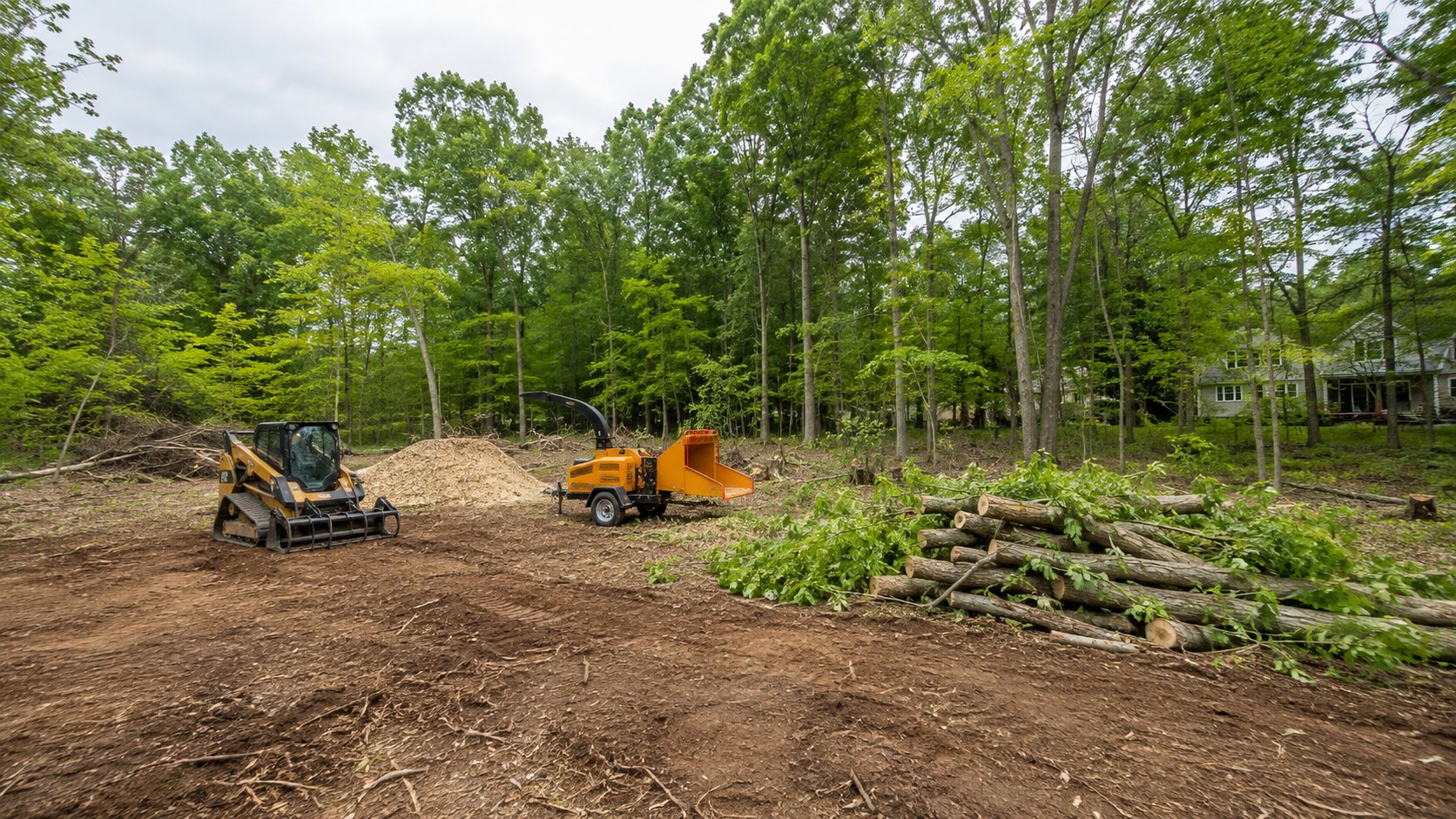
Every wooded lot we look at around Burtonsville starts with one decision: take everything down, or take out only what needs to go. That choice, selective land clearing versus full lot clearing, shapes how the land grades and drains, which trees survive the work, and whether Maryland’s forest and sediment rules apply. The answer is usually written into the property already, in its slope, its soil, the health of its trees, and what you plan to build. Here is how we read those signals before a single tree comes down.

Selective land clearing and full lot clearing are two different jobs

Selective land clearing removes specific trees and vegetation, the dead, diseased, crowded, invasive, or poorly placed material, while leaving healthy, well structured trees and the understory worth keeping. Full lot clearing takes everything down to open ground, usually paired with grading to create a level, buildable pad. Both are legitimate; they suit different properties. The trap is defaulting to full clearing because it looks simpler, when the property in front of you may be telling you to keep far more than you remove.

Signals that point toward selective clearing

Some lots ask to be thinned rather than stripped. Look for mature, structurally sound hardwoods that give you shade, screening, and privacy. On a slope or near a stream, established root systems hold soil in place, and pulling them all out at once invites erosion. And if the structure, driveway, and utilities occupy only part of the lot, there is no reason to clear the rest.

Signals that point toward full clearing

Other lots call for a clean slate. Dense scrub choked with invasive vines, thickets of low grade stems, and stands with no specimen trees worth saving offer little to preserve. If the building envelope, grading, and access will occupy most of the lot anyway, selective work only slows things down. And when the trees across a parcel are declining or hazardous as a group, taking them down together is the honest call. Even then, full clearing is the bigger disturbance and more likely to cross the thresholds below, so it should be deliberate, not a default.

The part most people get wrong: the trees you keep are the ones at risk

This is where selective clearing quietly succeeds or fails: deciding to keep a tree is not the same as protecting it. What kills preserved trees usually is not the saw. It is the equipment, grading, and soil changes around them, and it shows up slowly. University extension guidance from the Texas A&M Forest Service explains that adding fill to the root zone limits the amount of oxygen and moisture available to the roots, and that grade changes affect a tree either by removing roots when the grade is lowered or suffocating them when the grade is raised. The same guidance warns that it may take several years for trees to overcome and adjust to the injury and site changes that occur during construction. A tree can look fine the season the work wraps up and be dead a few years later. That is why real selective clearing protects the critical root zone, commonly fenced at roughly one foot of radius for every inch of trunk diameter, so machines stay out from under the trees you kept.

How Maryland’s rules tilt the decision

Two Maryland layers can turn a clearing into a reviewed, permitted project. The first is about soil and water. The Maryland Department of the Environment requires erosion and sediment control plans to be reviewed and approved for earth moving activity that disturbs 5,000 square feet or more of land area or 100 cubic yards or more of soil. By retaining soil on site, sediment and nutrients are prevented from running off the disturbed area and polluting streams and other surface waters, central to Maryland’s effort to protect the Chesapeake Bay. The second layer is forest. Under Montgomery County’s Forest Conservation Law, owners of properties greater than 40,000 square feet who must submit a development application or obtain a sediment control permit fall under the law, and anyone subject to it must meet a calculated forest retention or forest planting requirement. Selective clearing that leaves mature, healthy forest standing can help satisfy that retention, while scraping a lot bare can leave you replanting later. The law does not reach a single yard tree that is not part of a forest. Because these thresholds can change, confirm the current rules with Montgomery County and the state before you finalize a plan.

What happens below the surface: grubbing and debris

Clearing only settles what happens above ground; the selective versus full choice decides the work left underneath. Full clearing for construction almost always needs grubbing, the step that pulls out roots, buried stumps, and organic material so the ground does not settle or resprout under a future foundation, driveway, or lawn. Selective clearing usually needs far less, because most root systems stay in place doing their job. When we scope a project, land grubbing and debris removal is a separate part of the plan from the clearing itself, and the amount you need is one more reason the decision matters before any work begins.

How we help you decide what your property needs

The best decisions come from walking the lot, not a satellite view. We separate what has to go from what is worth saving, read the slope and drainage, weigh the sediment and forest thresholds, and check whether the trees you want to keep can survive the work. If you are weighing selective land clearing against clearing a lot entirely around Burtonsville, that walkthrough is the fastest route to a plan you will not regret.

Frequently Asked Questions About Selective Land Clearing

What is the difference between selective land clearing and full lot clearing?

Selective land clearing removes only what needs to go, the dead, diseased, crowded, invasive, or poorly placed growth, while leaving healthy trees and understory in place. Full lot clearing takes everything down to open ground for a level, buildable pad. Selective clearing keeps shade, screening, and the roots that hold soil, while full clearing gives you a blank slate in exchange for more disturbance.

Is selective land clearing better for the environment?

It usually disturbs less. Keeping established root systems in place helps hold soil, which reduces the erosion and runoff Maryland works to keep out of streams and the Chesapeake Bay. On qualifying properties, standing forest can also help meet county retention requirements. The right choice depends on your lot and what you are building.

Will clearing my lot require a permit in Maryland?

It can, depending on scope. The Maryland Department of the Environment requires an approved erosion and sediment control plan for earth moving activity that disturbs 5,000 square feet or more of land area or 100 cubic yards or more of soil. On properties greater than 40,000 square feet that need a development application or a sediment control permit, Montgomery County’s Forest Conservation Law also applies. Requirements change, so confirm the current rules with the county and the state before you start.

Can trees I keep during clearing still die afterward?

Yes, and it is common and avoidable. The Texas A&M Forest Service notes that adding fill over the root zone limits the oxygen and moisture roots receive, and that lowering or raising the grade can remove or suffocate roots. The decline is often delayed, and it may take several years for a tree to show construction injury. Protecting the critical root zone, typically fencing about one foot of radius per inch of trunk diameter, is how you keep preserved trees alive.

Do I need grubbing if I only do selective clearing?

Usually much less than a full clearing requires. Grubbing pulls out roots, stumps, and buried organic material so the ground does not settle or resprout, and it is essential where a foundation, driveway, or lawn is going in. With selective clearing most root systems stay in place on purpose, so grubbing is limited to the stumps actually removed.

Weighing selective clearing against clearing a lot completely around Burtonsville? The team at Hometown Tree Experts will walk your property, read the signals, and map a clearing plan that protects what is worth keeping. Reach out to us and we will help you decide the right approach from the start.


Do You Need a Permit to Clear a Lot in Maryland?

By Hometown Tree Experts

Most homeowners picture lot clearing as a purely physical job: bring in a crew, take down the trees, haul off the brush, done. In Maryland, there is a step that comes before any of that, and it catches people off guard. Past certain sizes, clearing land is not just work you schedule, it is a permitted, plan-reviewed activity regulated by the state and the county. We have cleared enough overgrown lots around Burtonsville, Silver Spring, and the rest of Montgomery County to know that the paperwork can start well before the first tree comes down. Here is when a permit is actually required in Maryland, what the review involves, and how to plan a clearing so the approvals do not blindside you.

Clearing a lot in Maryland is often a regulated activity

The instinct is to treat a wooded lot as private property you can simply clear at will. For a small job that can be true, but the rules scale up quickly with the size and character of the clearing. Maryland has two separate layers of regulation that can apply to a lot clearing project, and they are triggered by different thresholds. One is about protecting soil and waterways during the work. The other is about protecting forest. A lot can fall under one, both, or neither, and knowing which applies to your property is the difference between a smooth project and a stop-work order.

None of this means you cannot clear your land. It means the clearing has to be planned and, past a point, approved. The property owners who run into trouble are almost always the ones who started cutting first and asked questions later. The ones who have a good experience start by understanding which line their project crosses.

Sediment and erosion control: the 5,000 square foot line

Start with the ground itself. The Maryland Department of the Environment requires an approved erosion and sediment control plan for any earth-disturbing activity that affects 5,000 square feet or more of land, or that moves 100 cubic yards or more of earth. That threshold is smaller than most people expect. An acre in Maryland is 43,560 square feet, so 5,000 square feet is only about a tenth of an acre. Clear and grub a modest wooded corner of a suburban lot and you can cross that line, which means an approved plan and a grading permit before the disturbance begins, along with the erosion controls the plan calls for.

This layer exists because bare, freshly cleared soil washes into storm drains and streams when it rains, and Maryland takes runoff into the Chesapeake Bay watershed seriously. For a homeowner, the practical takeaway is simple: if your clearing will disturb more than roughly a tenth of an acre of ground, assume sediment and erosion control is part of the job, and plan for the permit rather than around it.

The Maryland Forest Conservation Act and the 40,000 square foot line

The second layer is about the trees themselves, and it is the one that surprises people the most. The Maryland Forest Conservation Act applies statewide. When a project on a tract of 40,000 square feet or greater triggers a subdivision, site plan, grading, or sediment control application, it generally falls under the Act and requires a Forest Stand Delineation, which is a survey of the existing forest, followed by a Forest Conservation Plan that spells out how forest will be preserved or replaced.

Here in Burtonsville, the county version applies. Montgomery County’s Forest Conservation Law covers properties greater than 40,000 square feet, which is just under one acre, when the owner needs a development or sediment control approval. Cross that threshold on a qualifying project and clearing forest is no longer a simple removal. It becomes a reviewed action with delineation, a plan, and conservation obligations attached. Because these thresholds and requirements can change, confirm the current rules with Montgomery County and the Maryland Department of the Environment before you finalize any plan.

What forest conservation can require

When a project falls under the Forest Conservation Law, removing forest is not the end of the conversation. Depending on the plan, you may be required to preserve a portion of the existing forest, replant, or otherwise mitigate the forest that comes out. In other words, the review does not just ask whether you can clear. It shapes how much you clear, what you keep, and what you put back. For a property owner, that is a strong reason to plan the clearing deliberately rather than defaulting to taking everything down.

There is one important boundary that keeps this in perspective. Montgomery County’s Forest Conservation Law applies to forest on qualifying properties. By its own terms, it does not regulate the removal of street trees or individual trees that are not part of a forest. So a homeowner taking down a single hazard tree in the yard is in a completely different situation from someone clearing a wooded half acre for a build. The rules scale up with the scope of the clearing, which is exactly why the size and character of your lot decide whether a permit is in play at all.

A single tree is not a lot clearing, and the rules know the difference

This distinction matters because the two jobs get talked about as if they were the same. Removing one dead oak near the driveway is routine tree work. It does not delineate a forest or trigger a conservation plan. Clearing a dense, wooded parcel to open it up for construction is a land-disturbing project that can cross both the sediment control and forest conservation thresholds at once. If you are unsure which category your property falls into, that uncertainty is itself a good reason to talk to a crew that works in Montgomery County regularly and knows how these thresholds are read locally. When we handle a project like this, we scope it as a real lot clearing service in Burtonsville, MD, which means understanding the regulatory picture before we ever start cutting, not after.

Selective clearing can simplify the approvals

Not every lot needs to be scraped bare, and the level of clearing you choose can change how the rules apply to you. Selective clearing, where a crew removes dead, crowded, or poorly placed trees while leaving healthy specimens and the understory you want to keep, preserves shade, privacy, and property value, and it can also reduce the amount of forest you are removing under a conservation plan. Full clearing, where everything comes down to open ground, is more disturbance and more likely to trip the thresholds above.

A good crew will walk the lot with you and separate what has to go from what is worth saving, and in a county with a forest conservation program, keeping mature, structurally sound trees can work in your favor during review. Below the surface, grubbing is a separate step from clearing: clearing removes what is above ground, while land grubbing and debris removal pulls out the roots, buried stumps, and organic material that would otherwise settle or resprout under a future lawn, driveway, or foundation. If your lot is being cleared for construction, grubbing is usually part of the plan, and it is one more reason to map the whole project, and its approvals, before work starts.

Plan the approvals before the first tree falls

The homeowners who have the smoothest lot clearing projects in Maryland are the ones who treat the permitting as the first task, not an afterthought. Before anything comes down, it is worth knowing whether your clearing will disturb 5,000 square feet or more, whether your property crosses the 40,000 square foot forest conservation line, and what your county requires as a result. Getting those answers first prevents the worst outcome, which is a project halted partway through because a required plan was never filed. A crew that works in your area can help you understand which approvals apply to your specific lot and sequence the work around them. If you are planning to clear a wooded property around Burtonsville, you are welcome to reach out to us and we will help you plan it the right way from the start.

Frequently Asked Questions About Lot Clearing Permits in Maryland

Do I need a permit to clear a lot in Maryland?

Often, yes, depending on how much land you disturb and how large the property is. The Maryland Department of the Environment requires an approved erosion and sediment control plan, and a grading permit, for earth-disturbing activity of 5,000 square feet or more, or 100 cubic yards or more of earth movement. On tracts of 40,000 square feet or greater, a project that triggers a subdivision, grading, or sediment control application can also fall under the Forest Conservation Act. Requirements vary by scope and location, so confirm with Montgomery County and the state before you start.

What is a Forest Stand Delineation and a Forest Conservation Plan?

They are the two documents the Forest Conservation Act generally requires on qualifying projects. A Forest Stand Delineation is a survey of the existing forest on the property, and a Forest Conservation Plan spells out how that forest will be preserved, replaced, or otherwise mitigated as part of the clearing. Together they turn a clearing into a reviewed, planned action rather than a simple removal.

Does the Forest Conservation Act mean I have to replant trees I remove?

On qualifying projects, it can. Properties greater than 40,000 square feet that trigger a development or sediment control approval fall under Montgomery County’s Forest Conservation Law, which may require preserving, replanting, or otherwise mitigating forest that is removed. The removal of a single non-forest tree or a street tree is treated differently and is generally not regulated the same way.

Do I need a permit to remove a single tree in my yard?

Generally no, not under the forest conservation rules. Montgomery County’s Forest Conservation Law applies to forest on qualifying properties, and by its own terms it does not regulate the removal of individual trees that are not part of a forest, or street trees. Taking down one hazard tree in your yard is different from clearing a wooded lot. If your project is larger or near the size thresholds, it is worth confirming with the county.

What is the difference between clearing and grubbing?

Clearing removes what is above ground, the trees, brush, and vegetation. Grubbing goes below the surface to pull out roots, buried stumps, and organic material. For lots being cleared for construction, grubbing is usually necessary so the ground does not settle or resprout later, and because it disturbs more soil it can factor into the sediment control requirements for the project.

Planning to clear a wooded lot around Burtonsville? Knowing which permits and plans apply to your property before you start is the single best way to keep the project on track. Reach out to Hometown Tree Experts and we will walk your lot with you and map out the right approach.