
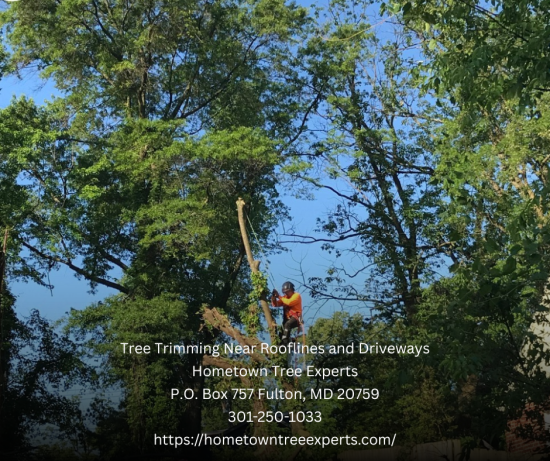
Proper tree trimming near rooflines and driveways guarantees safety and minimizes storm-related risks. Overgrown branches can damage shingles and compromise visibility, leading to potential hazards. Maintaining a minimum clearance of ten feet from rooflines and twelve feet above driveways is crucial. Regular trimming reduces the risk of falling branches and enhances curb appeal. Professionals equipped with specialized tools provide superior results, adhering to safety standards. Discover essential tips and techniques to effectively maintain tree safety and aesthetics.
The Risks of Overgrown Branches
Overgrown branches pose significant risks to both property and personal safety. When branches extend unchecked, they can interfere with power lines, increasing the risk of electrical hazards and outages. Such branches may also obstruct visibility for drivers, leading to potential accidents. Additionally, during storms, these branches can become projectiles, endangering nearby structures and individuals. They harbor pests, including insects and rodents, which can migrate to nearby buildings, causing further issues. Branches too close to windows can lead to breakage during high winds, creating safety hazards from shattered glass. Consistent trimming is vital to mitigate these risks. Regular maintenance guarantees that branches remain a safe distance from structures and pathways, maintaining clear lines of sight and reducing potential harm.
Protecting Your Roof From Damage
When trees grow too close to a roofline, they can inflict significant damage, necessitating costly repairs. Branches rubbing against roofing materials can erode shingles, leading to leaks. Additionally, falling limbs pose a threat to structural integrity, potentially causing punctures or cracks. To mitigate these risks, regular tree inspections are vital. A certified arborist should be engaged to assess and trim branches safely, maintaining a minimum clearance of ten feet from the roofline.
Proper pruning techniques are important to prevent regrowth that could exacerbate the problem. Homeowners should also guarantee gutters remain clear of debris, reducing water accumulation that exacerbates roof damage. By adopting these preventative measures, one can protect their roof, prolonging its lifespan and preserving structural safety.
Ensuring Safe Driveway Access
Maintaining clear and safe driveway access is essential for guaranteeing both vehicle safety and property protection. Overhanging branches can obscure visibility, leading to potential collisions or damage to vehicles. Regular tree trimming near driveways mitigates these risks by improving sightlines and minimizing obstructions. Precise trimming practices are vital; branches should be pruned to a safe distance from the driveway, ideally maintaining a clearance of at least 12 feet above the ground to accommodate vehicle height.
Moreover, it’s imperative to evaluate the structural integrity of trees near driveways. Weak or dead branches pose significant hazards and should be removed promptly. Engaging certified arborists guarantees that the trimming process adheres to safety standards, reducing risks while preserving tree health. This proactive maintenance fosters a safer environment for all users.
Preventing Storm-Related Hazards
Addressing tree trimming near driveways not only enhances vehicle safety but also plays a vital role in preventing storm-related hazards. Overhanging branches can become projectiles during high winds, posing a threat to both property and people. By regularly trimming trees, homeowners can reduce the risk of branches breaking and causing damage to vehicles, rooflines, or power lines. Additionally, well-maintained trees are less likely to uproot during severe weather, minimizing the potential for obstruction or injury. It’s essential to remove any dead or diseased branches, as they are particularly susceptible to storm damage. Proper trimming techniques should be employed, ensuring cuts are made at the branch collar to promote healthy regrowth and avoid compromising the tree’s structural integrity.
Enhancing Your Home’s Curb Appeal
By strategically trimming trees near rooflines and driveways, homeowners can greatly enhance their home’s curb appeal while guaranteeing safety. Properly maintained trees present a tidy, inviting landscape, free from overhanging branches that obscure the home’s architectural features or impede visibility. Maintaining an appropriate tree canopy height guarantees adequate sunlight reaches the property, highlighting landscaping and structural details.
Trimming also prevents leaves and branches from cluttering driveways, reducing slip hazards and maintaining a clean, welcoming entrance. Consistent pruning promotes healthy tree growth, leading to lush, vibrant foliage that complements the home’s exterior aesthetics. Furthermore, well-trimmed trees can increase property value by providing a polished look that appeals to potential buyers. Safety is paramount, guaranteeing branches are clear from power lines and structures.
Tools and Techniques for Effective Trimming
When starting tree trimming projects near rooflines and driveways, selecting the right tools and mastering precise techniques guarantees both safety and effectiveness. Pruning shears, loppers, and pole saws are essential for handling branches of varying thicknesses. For high branches, telescopic pole pruners guarantee reach without compromising stability. A sturdy ladder, positioned securely, aids access to elevated sections. Always wear safety goggles, gloves, and a hard hat to protect against falling debris. Techniques like the three-cut method prevent bark tearing: initiate an undercut, make an overcut, and finalize with a clean cut at the branch collar. Employing sharp tools reduces effort and guarantees clean cuts, minimizing tree stress. Precision and awareness in every cut maintain tree health and protect adjacent structures.
Seasonal Considerations for Tree Maintenance
Although tree maintenance is a year-round task, understanding seasonal variations is vital for ideal care. During dormancy in winter, sap flow is minimal, reducing stress on trees and preventing disease spread. This period is best for major pruning tasks, especially for deciduous species. In spring, focus on removing any winter-damaged branches and encouraging healthy growth. Monitor for pests, as warmer temperatures increase their activity. Summer requires careful trimming to manage excessive growth, guaranteeing branches don’t obstruct driveways or rooflines. It’s important to avoid heavy pruning, which can stress trees. Autumn offers a chance to prepare trees for winter by removing deadwood and evaluating structural integrity. Seasonal awareness guarantees safety and promotes tree health surrounding homes and driveways.
Hiring Professional Tree Services
Engaging professional tree services guarantees that tree trimming near rooflines and driveways is performed with expert precision and safety. Professionals utilize specialized equipment like pole pruners and aerial lifts, confirming accurate cuts and preventing damage to structures. They assess tree health and structural integrity, identifying potential hazards such as weak limbs or disease. Certified arborists follow ANSI A300 standards, emphasizing industry best practices and safety protocols. They implement rigging techniques to control branch descent, minimizing risks to property and individuals below. Professionals are trained in safe climbing techniques and employ personal protective equipment (PPE) to reduce injury risks. Their expertise confirms compliance with local regulations and environmental considerations, providing peace of mind and preserving the landscape’s aesthetic and functional value.
DIY Tips for Homeowners
Before tackling tree trimming near rooflines and driveways, homeowners should prioritize safety and precision to avoid potential hazards. They must wear appropriate personal protective equipment, including gloves, safety goggles, and hard hats. Using a sturdy ladder with a secure footing is critical to prevent falls. Homeowners should inspect tools such as pruning shears and saws, ensuring they’re sharp and in good working condition. Identifying and eliminating dead or weak branches reduces risks of property damage. It’s important to maintain a safe distance from power lines and avoid trimming in adverse weather conditions. Clear communication with anyone nearby during the process is essential. Finally, homeowners should dispose of trimmed branches responsibly, ensuring pathways and driveways remain unobstructed and safe for use.