
Tree Fertilization and Soil Improvement
Tree Fertilization and Soil Improvement by Hometown Tree Experts in Burtonsville, MD
Trees in a forest grow in loose, rich soil built up by centuries of fallen leaves. Trees in a Burtonsville yard often grow in compacted clay, stripped of topsoil during construction, with leaves raked away every fall. That difference shows up as thin canopies, pale leaves, slow growth, and trees that struggle to recover from drought or storms. Hometown Tree Experts provides tree fertilization and soil improvement in Burtonsville, MD and the surrounding areas, focusing on the root zone where tree health actually begins.
Our approach is to diagnose before we treat. As a two-time Angie’s List Super Service Award winner, we would rather correct the soil conditions holding a tree back than apply fertilizer a tree may not need.
What Fertilization and Soil Improvement Involves
Soil improvement addresses the physical and biological condition of the soil around a tree: compaction, poor drainage, low organic matter, and pH that keeps roots from taking up the nutrients already present. Fertilization addresses specific nutrient shortfalls. The two work together, and in many local yards the soil itself is the bigger problem.
Compaction is the most common issue we see. Construction equipment, foot traffic, and parked vehicles press clay soil so tightly that roots cannot get the oxygen and water they need. Loosening that soil and adding organic matter can do more for a struggling tree than fertilizer alone. Proper mulching is part of the same picture, and the ISA’s guide to proper mulching techniques explains why a wide, shallow mulch ring helps roots so much.
What Our Fertilization and Soil Improvement Service Includes
- Tree and site evaluation to identify signs of nutrient stress, compaction, drainage problems, or other causes of decline
- Soil testing when needed to check pH and nutrient levels before any product is applied
- Root zone decompaction to loosen compacted soil using methods that protect the roots
- Organic matter and compost amendments worked into the root zone to improve soil structure
- Targeted fertilization based on soil results and the needs of the species, rather than a one size fits all product
- Correct mulching across the root zone, with mulch volcanoes against the trunk removed
- Recommendations on watering, turf competition, and protecting the root zone from future compaction
- Follow up evaluation to see how the tree responds over the growing season
Every plan is based on what the tree and the soil actually need. Healthy trees in good soil often need no fertilizer at all.
Why Soil Comes First
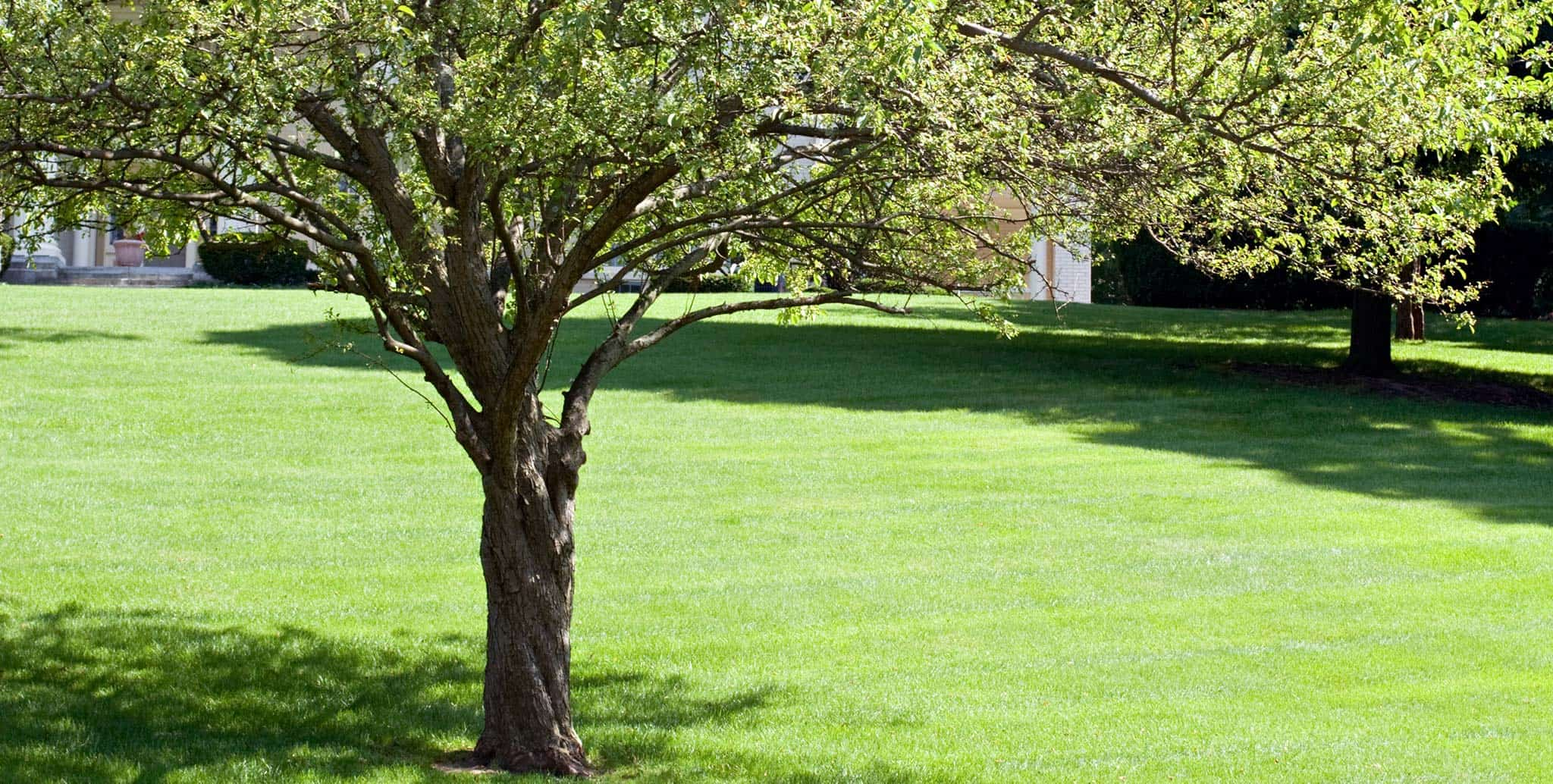
Fertilizer cannot fix a root system that cannot breathe. If soil is compacted, waterlogged, or far outside the right pH range, roots cannot use nutrients efficiently no matter how much is applied. Applying the wrong fertilizer, or too much of it, can even stress a tree further and contribute to runoff into local streams and, eventually, the Chesapeake Bay.
That is why our process starts with the soil. Maryland has specific rules on how fertilizer may be used, and the University of Maryland Extension offers soil testing guidance and research on caring for trees in our region. We follow a measured approach: improve the root environment first, then fertilize only where a real deficiency exists.
Helping Stressed Trees Recover
Soil improvement is especially valuable for trees recovering from construction damage, drought, root injury, or disease. Trees around newer homes often grow in a thin layer of topsoil over compacted subsoil, and trees near patios and driveways may have lost part of their root zone. Improving the soil they still have gives them the best chance to rebuild.
We often combine soil work with a tree health assessment to find the root cause of decline, and with disease treatment when pests or pathogens are part of the problem.
Who We Serve
- Homeowners with trees showing thin canopies, small or pale leaves, or slow growth
- Properties with compacted soil from construction, traffic, or parked vehicles
- Trees recovering from drought, storm damage, root injury, or construction stress
- Newer homes where topsoil was stripped and trees are struggling to establish
- Owners of valuable specimen trees who want to keep them healthy for the long term
At Hometown Tree Experts, tree fertilization and soil improvement in Burtonsville, MD is built on diagnosis. We treat the conditions holding your trees back, not just the symptoms.
Call us at 301-250-1033 to schedule a free estimate, or fill out our form to be contacted by a representative.
How We Improve Tree Health From the Ground Up
- Diagnose. We evaluate the tree and site and test the soil when needed.
- Loosen. We relieve compaction in the root zone without harming roots.
- Amend. We add organic matter, correct mulching, and targeted nutrition where it is needed.
- Monitor. We check how the tree responds and adjust the plan.
Related Tree Services
Frequently Asked Questions
Does my tree need fertilizer?
Not always. Many healthy trees in good soil do not need fertilizer. Signs that a tree may benefit include pale or small leaves, thin canopy, poor growth, and early fall color. A site evaluation, and a soil test when needed, tells us whether fertilizer, soil improvement, or something else is the right answer.
What is soil compaction and how does it affect trees?
Soil compaction happens when soil particles are pressed together by equipment, vehicles, or foot traffic. Compacted soil has little room for air and water, so roots struggle to grow and take up nutrients. It is one of the most common causes of decline in urban and suburban trees.
What is root zone decompaction?
Root zone decompaction loosens compacted soil around a tree, often using compressed air tools that break up the soil without cutting roots. Organic matter can then be worked into the loosened soil to improve its structure and help roots grow.
When is the best time to fertilize trees in Maryland?
Timing depends on the tree and the product, and fertilizer should only be applied when a real need exists. Soil improvement work such as decompaction and mulching can be done through much of the year. We recommend timing based on the specific tree and soil conditions.
How much mulch should go around a tree?
Mulch should be spread two to three inches deep in a wide ring around the tree, ideally out toward the drip line, and kept a few inches away from the trunk. Mulch piled against the trunk can trap moisture and lead to rot and pest problems.
Does Hometown Tree Experts serve areas outside of Burtonsville, MD?
Yes. Hometown Tree Experts serves Burtonsville and the surrounding communities in Montgomery, Howard, and Prince George’s counties. Contact the team to confirm service availability and to schedule an evaluation of your trees and soil.
